
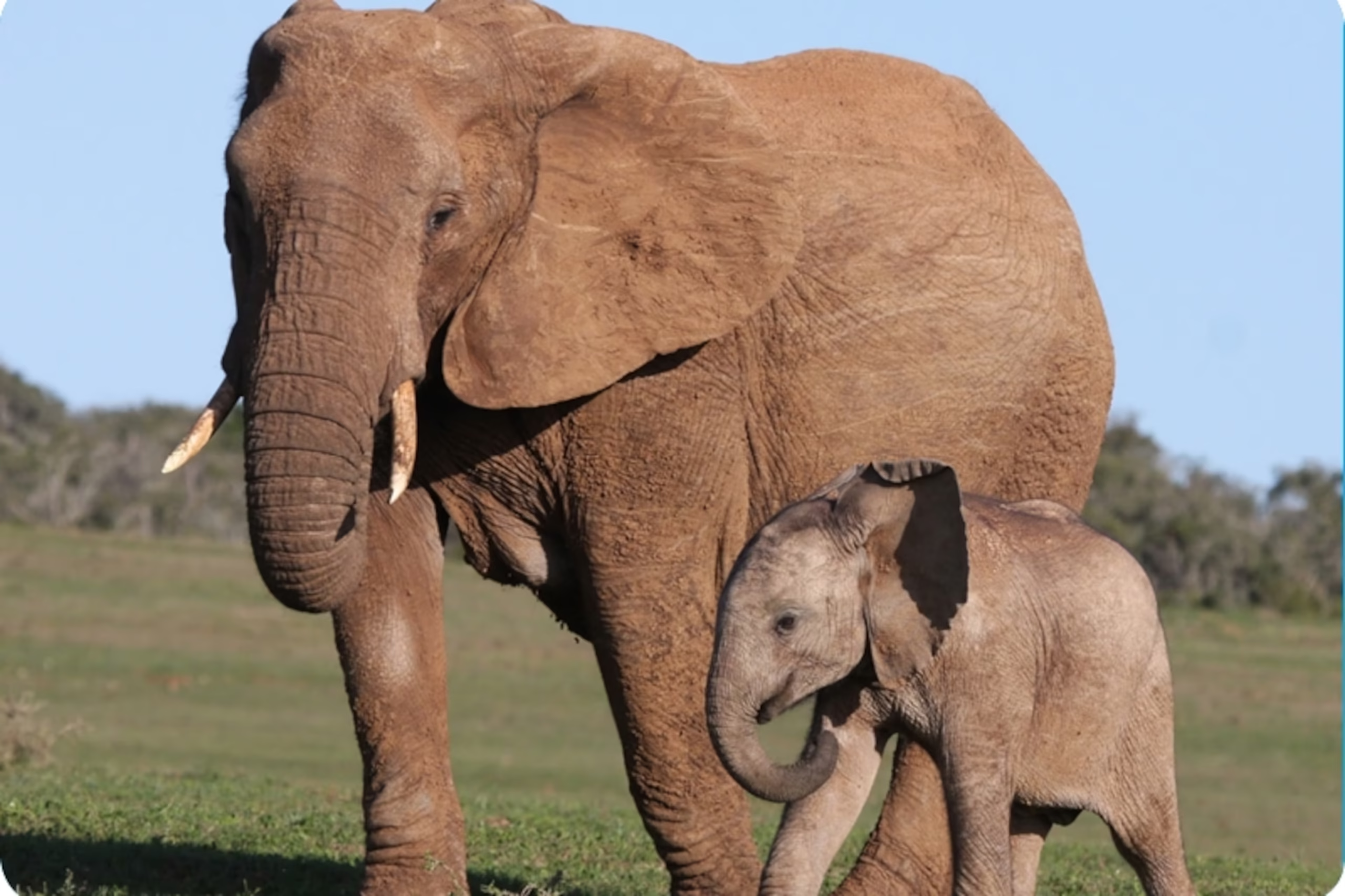
A major new genetic study of African elephants has found that centuries of poaching, habitat destruction and growing isolation of wildlife populations are leaving lasting marks on the continent’s largest land mammals.
Researchers analyzed 232 elephant genomes from 17 African countries in what they described as the first continent-wide study of both savanna and forest elephants as separate species.
The study by Nature Communications discovered that movement and interbreeding between elephant populations over long periods helped maintain healthy genetic diversity across Africa.
However, that natural connectivity is now under threat as human expansion fragments habitats and blocks migration routes, the study noted.
“Our findings highlight gene flow as a key force in African elephant evolution,” the researchers said.
They stressed that the ability of elephants to move and mix across landscapes has historically strengthened populations.
Moreover, the researchers confirmed clear genetic differences between Africa’s two elephant species: the savanna elephant, which lives mainly in grasslands, and the forest elephant, which inhabits tropical forests.
Researchers found forest elephants to have greater genetic diversity and fewer harmful mutations, suggesting historically larger and healthier populations. Meanwhile, Savanna elephants, by contrast, showed more inbreeding and a heavier genetic burden that could reduce resilience over time.
On the other hand the study also found evidence that many savanna elephant populations still carry small traces of forest elephant ancestry, indicating the two species mixed in some areas in the past.
Scientists warned that smaller and isolated elephant groups are already showing signs of genetic decline. Populations in places such as Ethiopia, Eritrea, Namibia and parts of West Africa had lower diversity and stronger evidence of inbreeding.
“We found evidence of genetic drift in bottlenecked, isolated populations at the extremes of the savanna elephant distribution, such as in Ethiopia and Eritrea,” the study said.
By contrast, elephants living in large connected landscapes in southern Africa, especially the Kavango-Zambezi Transfrontier Conservation Area spanning five countries, showed stronger genetic health and lower inbreeding.
Overall, the study findings suggest that protecting elephants will require more than guarding national parks from poachers.
Researchers said maintaining wildlife corridors and cross-border movement routes will be essential to allow elephants to breed across wider ranges.
“The loss of genetic connectivity is becoming a major concern,” the authors said.
IMAGE CREDIT: National Geographic Kids