
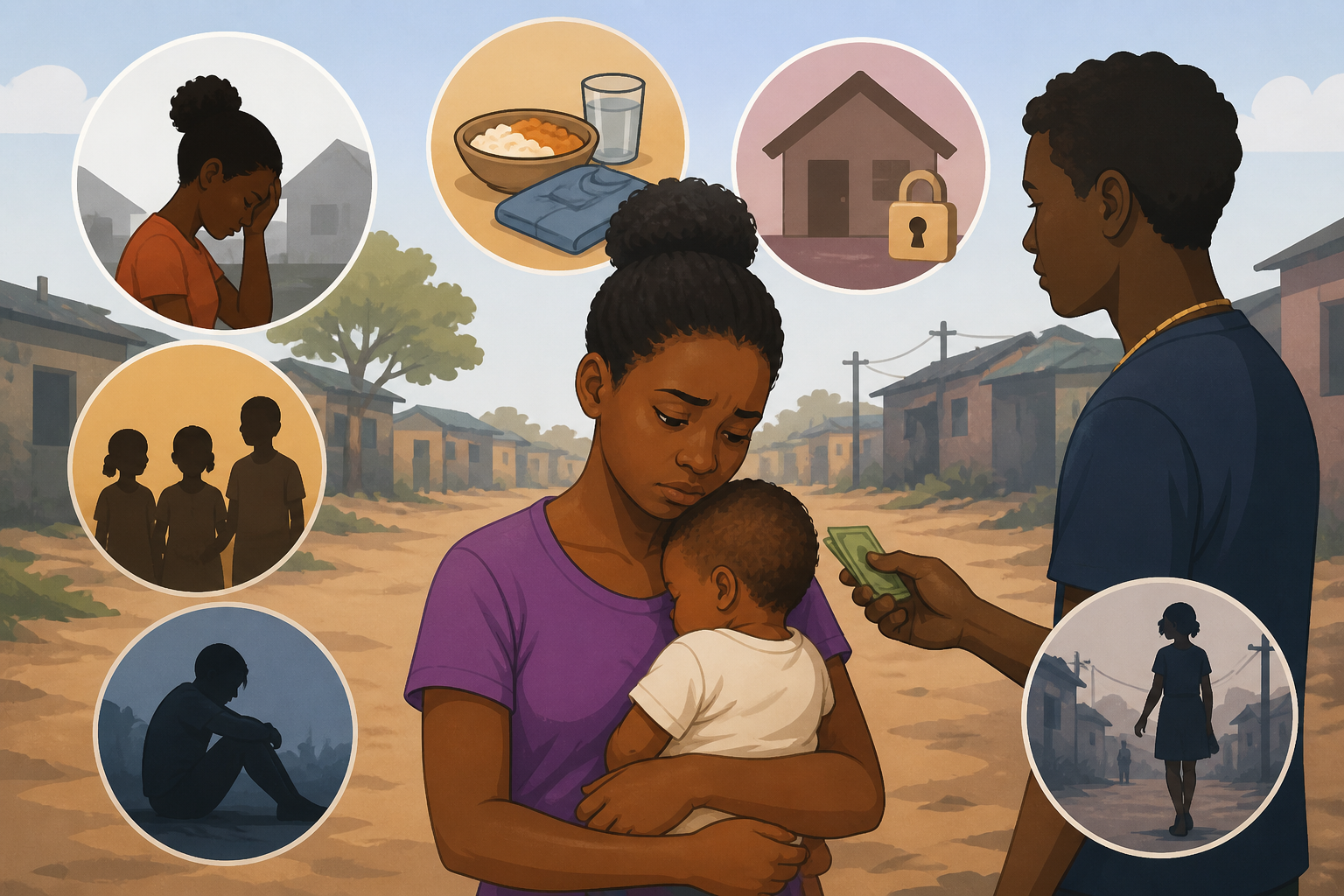
Transactional sex is common among pregnant and parenting teenage girls in parts of sub-Saharan Africa, driven largely by poverty, weak family support and unsafe living conditions, according to a new multi-country study.
Published in the BMJ Public Health Journal, the research, conducted in Burkina Faso, Kenya and Malawi, found that the practice where sex is exchanged for money, food or other basic needs is especially prevalent in Kenya, where more than four in ten adolescent mothers are reported to engage in it.
Meanwhile, though the rates were found to be lower but the practice is still significant in Burkina Faso and Malawi.
Researchers say the findings highlight how economic hardship and social vulnerability push young mothers into risky relationships as a means of survival.
Many of the girls reported exchanging sex to secure essentials such as food, rent, clothing or childcare support, reflecting the pressures of early motherhood in low-resource settings.
“Transactional sex among pregnant and parenting adolescents remains widespread, with prevalence reaching as high as 44.3% in Kenya,” the study found.
The study shows that unmarried girls are significantly more likely to engage in transactional sex than those who are married, suggesting that the absence of a stable partner increases financial and social vulnerability.
Additionally, it also identifies orphanhood and lack of parental support as major risk factors, with girls who have lost one or both parents or who receive little family support facing a higher likelihood of turning to such relationships.
In many cases, the researchers note that transactional sex is less a matter of choice than a response to difficult circumstances. Girls often rely on these relationships to cope with deprivation or to secure protection in unsafe environments.
“Transactional sex often serves as a coping mechanism in the face of extreme deprivation,” the study noted.
Furthermore, community conditions also play a role. Adolescents living in safer neighborhoods were less likely to engage in transactional sex, suggesting that insecurity and fear of violence can push girls toward relationships that offer protection in exchange for sex.
The study concluded that tackling the issue will require more than individual behavior change but rather it calls for targeted interventions that address poverty, strengthen family and community support systems, and improve safety in vulnerable areas.
“Interventions should address structural vulnerabilities, strengthen family and community support systems, and improve neighborhood safety,” the researchers stated. \
IMAGE IS AI GENERATED.