
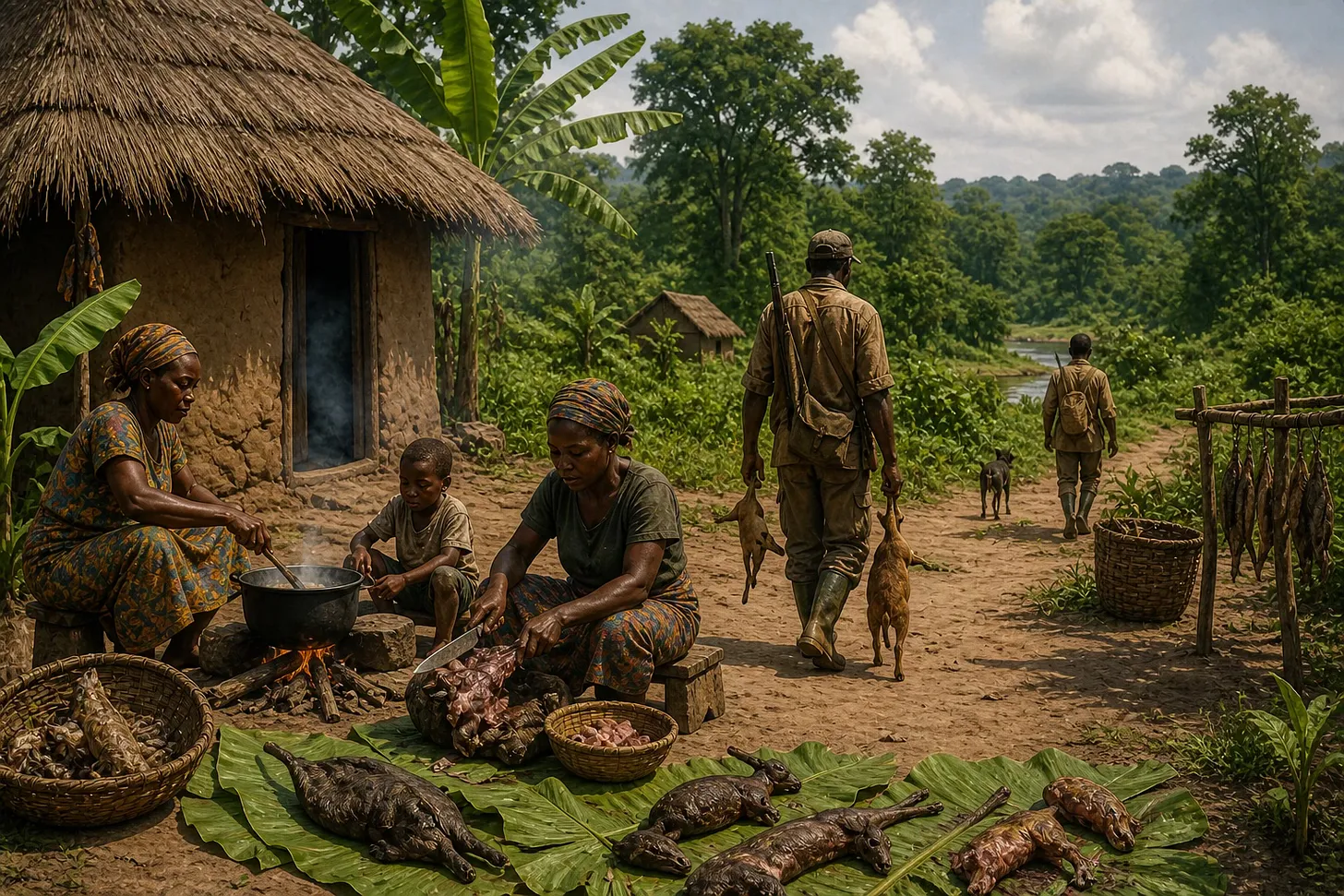
People in Central African countries eat large amounts of wild meat–and for many, it is a matter of survival.
In rural areas, alternatives like beef, chicken, or fish are often too expensive or difficult to access, according to a paper published in Nature.
“Wild meat is a fundamental component of the diets of rural populations,” the authors wrote. They add that for many families, it is a daily source of essential nutrients rather than a luxury.
The study found that wild meat accounts for “20% of the recommended daily protein intake” in rural communities.
In regions where food systems are underdeveloped and livestock farming is challenging, this contribution is critical. Researchers warn that removing wild meat without providing alternatives could worsen hunger and malnutrition.
But demand is no longer driven only by rural need. As populations grow and cities expand, consumption is increasing in urban areas. The study points to “increasing demand from towns and cities,” where wild meat may be eaten for taste, tradition, or status.
Although urban residents consume less wild meat per person, their numbers amplify the impact. “Cities and towns… might be responsible for the consumption of around 40%… of all the wild meat hunted,” the authors said.
What is striking is the sharp rise in consumption. The researchers estimate that the total amount of wild meat eaten in Central Africa “increased from 0.73 million to 1.10 million tonnes between 2000 and 2022.”
This growing demand is putting significant pressure on wildlife populations. The consequences are serious. “Human consumption of wildlife is a threat to 31% of all mammals, birds, reptiles and amphibians currently threatened with extinction in the region,” the paper states. In many cases, animals are being hunted faster than they can reproduce, which raises concerns about long-term sustainability.
It is difficult to strike a balance. “Wild meat consumption makes important contributions to human nutrition… particularly in rural areas,” the authors note. At the same time, “the demand for wild meat… is threatening the wildlife populations that underpin the livelihoods of many rural communities.”
To address this, researchers argue that efforts should focus on reducing consumption where it is less essential. “Reducing wild meat consumption in urban metropolises is key,” they conclude. They also call for better access to alternative protein sources and more sustainable management of wildlife.
IMAGE IS AI GENERATED