
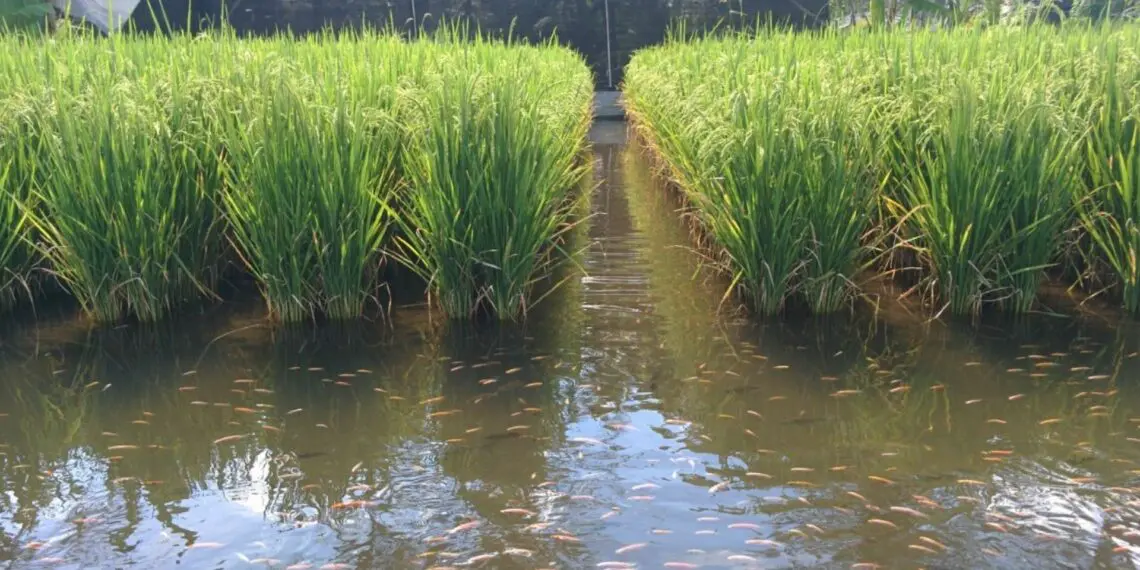
A new study conducted in northern Senegal has found that raising fish alongside rice in flooded rice fields could help reduce the spread of schistosomiasis, a dangerous parasitic disease, while also increasing rice harvests and improving farmers’ incomes.
The research, published in the journal Nature Sustainability, examined more than 400 households in the Senegal River Valley, where rice farming is common and schistosomiasis remains a major public health concern.
In their key findings, researchers discovered that children from rice-farming households were more likely to suffer from infections linked to the disease compared to children from non-farming families.
“Children from rice-farming households faced higher risks of schistosomiasis infections than their non-farming peers,” the study found.
To tackle the problem, scientists introduced native fish species, particularly; Nile tilapia and African bonytongue into rice paddies which naturally fed on snails and insects found in the flooded fields.
As freshwater snails are known to spread schistosomiasis parasites to humans, the study showed that the fish helped lower snail populations, reduced insect pests and improved soil nutrients important for crop growth.
Furthermore, the researchers also found that rice fields stocked with fish produced more rice than fields without fish.
“Adding native fish to rice fields boosted rice yields by more than 25 percent while also helping suppress disease-carrying snails,” the researchers stated.
According to the researchers, the fish survived and grew in the rice fields without the need for expensive fish feed, making the system affordable for small-scale farmers.
The farming model also generated significant economic benefits, with estimates showing farmers could earn thousands of dollars more per hectare annually compared to traditional rice farming alone.
Additionally, the researchers say the findings highlight how agriculture, environmental protection and public health solutions can work together instead of separately. They believe the approach could help communities facing poverty, food insecurity and infectious diseases across Africa.
“Rice–fish co-culturing offers a sustainable solution that improves agricultural production, rural livelihoods and disease control at the same time,” researchers said.
The team is now calling for wider trials of rice–fish farming systems in other African regions affected by schistosomiasis, arguing that the method could become an important tool for improving food security while protecting public health.
IMAGE SOURCE