
HIV infections have significantly declined across Africa over the past decades, but transmission continues to persist within large and often hidden sexual networks, particularly those involving female sex workers and their male clients, according to a new study, yet to be peer reviewed.
The study, titled “HIV Transmission in a Declining African Epidemic,” was carried out by researchers from Johns Hopkins University, Makerere University, the Rakai Health Sciences Program, and several international institutions.
Conducted between 2021 and 2024, the research sought to understand how HIV continues to spread despite major progress in testing, treatment, and awareness campaigns across Eastern and Southern Africa.
Researchers performed nearly 39,000 HIV tests among more than 22,000 people living in 34 communities in southern Uganda. From the participants tested, 187 people were identified as having newly acquired HIV infections. Scientists then traced sexual partners connected to the infected individuals and studied the broader sexual networks involved.
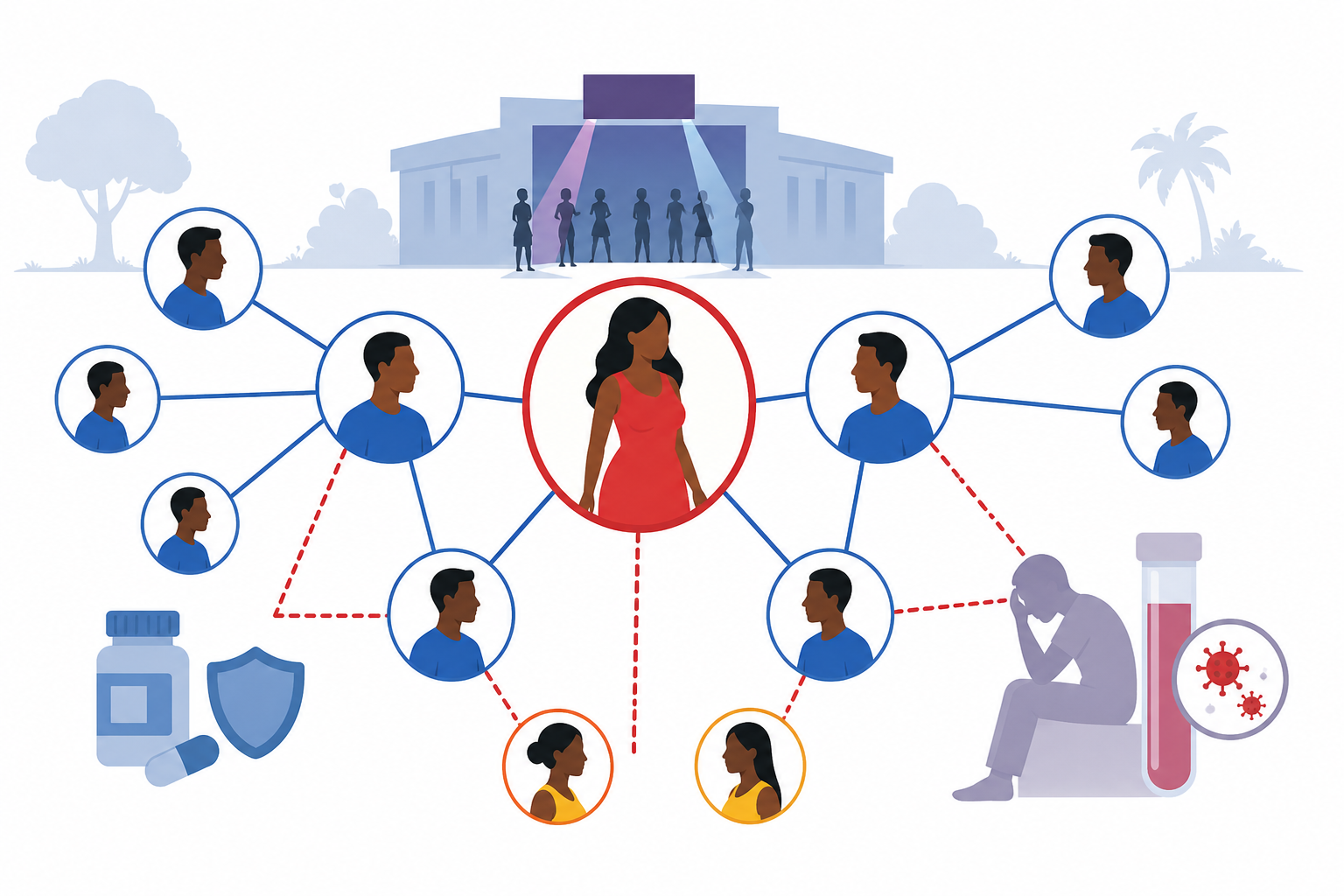
One of the most significant findings from the study was the prominent role played by female sex worker networks in ongoing HIV transmission. According to the researchers, 43 percent of men who had recently acquired HIV reported having sexual relationships with female sex workers. The study further estimated that more than one-third of new HIV infections among men were linked to such partnerships.
“Men with FSW [Female Sex Worker] partners accounted for a substantial share of incident HIV infections and had markedly higher odds of infection than men without such partnerships,” the researchers stated in the study.
The study found that men connected to female sex worker networks often had much larger sexual networks than other participants, increasing the likelihood of wider HIV transmission within communities. Researchers explained that many of these men also maintained relationships with non-commercial sexual partners, creating what they described as “bridging networks” that continue spreading HIV into the wider population.
Another major concern highlighted by the study was the low use of HIV prevention services among people considered at high risk. Among HIV-negative partners linked to newly infected participants, current use of pre-exposure prophylaxis (PrEP) remained below 10 percent.
“Individuals at high risk remain insufficiently reached by prevention services,” the study noted while discussing the low uptake of PrEP within high-risk sexual networks.
Researchers also observed that HIV transmission is no longer concentrated within a few obvious clusters. Instead, infections are spread across fragmented and difficult-to-track social networks, making prevention and contact tracing increasingly challenging for health authorities.
The study further says that many of the venues linked to sex work activities had not previously been identified through existing HIV outreach programs, suggesting major gaps in community-level prevention efforts.
“Low uptake of prevention interventions in case networks were consistent across age groups,” the researchers added, warning that gaps in prevention services continue to leave vulnerable populations exposed to infection.
IMAGE IS AI GENERATED