
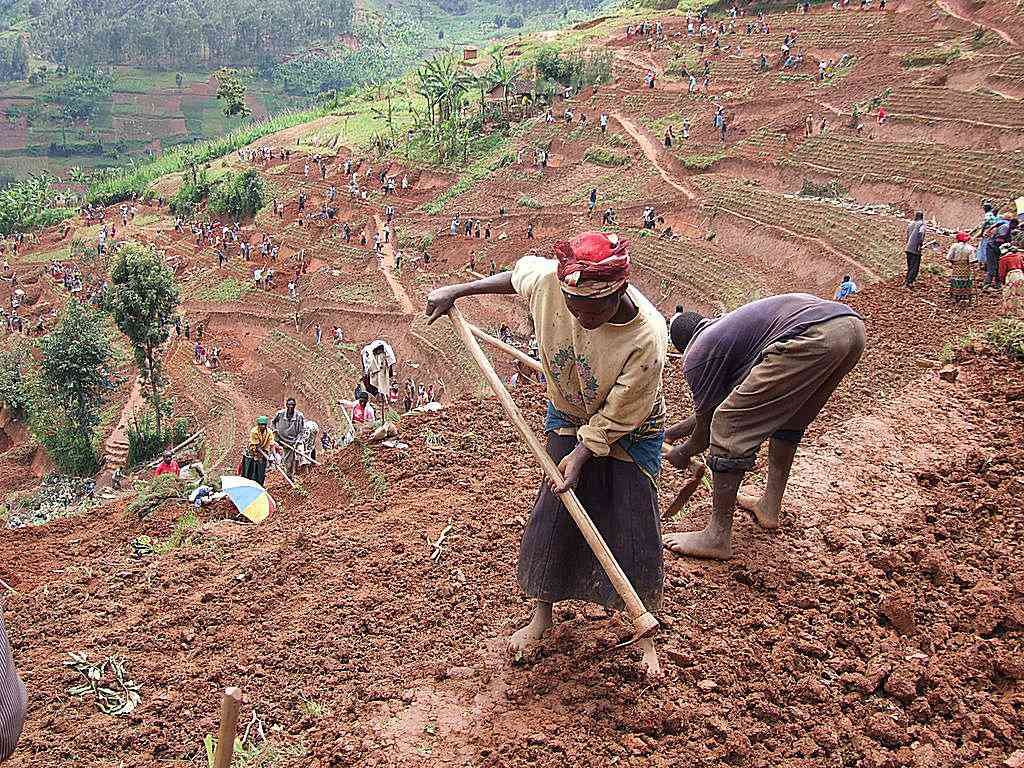
Scientists have warned that widely used global soil carbon models may be failing to accurately predict how African soils store carbon, which raises concerns about the reliability of climate change forecasts and carbon offset projects across the tropics.
A new study published in the Journal of Geophysical Research: Biogeosciences tested three major soil carbon models across 777 soil samples collected throughout sub-Saharan Africa and found that all performed poorly despite their widespread use in global climate science.
“All three models performed poorly and similarly, explaining only 9%–18% of the observed variation in soil carbon stocks,” the researchers wrote in the study.
The study examined the Century, Millennial and MIMICS models, which are commonly used to estimate how much carbon soils can absorb and store.
Soil carbon plays a crucial role in slowing climate change because soils hold enormous amounts of carbon that would otherwise enter the atmosphere.
To the contrary, researchers said most existing models were developed mainly using data from Europe and North America, making them less effective in tropical regions such as sub-Saharan Africa, where soils are chemically and biologically different.
“Current soil carbon models have fundamental structural gaps when applied outside temperate regions,” the study found.
Furthermore, the researchers discovered that the models placed too much emphasis on plant growth as the main driver of soil carbon while failing to properly account for the role of minerals, calcium and other soil chemistry processes that are especially important in highly weathered African soils.
The study also found that newer, more sophisticated models did not significantly outperform older simpler ones, suggesting that adding complexity alone does not guarantee better predictions.
“Mechanistic complexity will likely only be beneficial if the right mechanisms are included,” the researchers wrote.
Scientists warned that inaccurate soil carbon estimates could affect climate mitigation programs that rely on predicting how much carbon African soils can store. Sub-Saharan Africa alone is estimated to hold about 24 billion tons of carbon in just the top five centimeters of soil.
The researchers said current models also fail to capture several tropical soil processes, including wet-dry cycles, redox reactions, bushfire charcoal storage, termite activity and rapid land-use changes.
They called for the development of region-specific soil carbon models tailored to African and tropical soil systems, along with greater investment in local soil data collection and long-term environmental monitoring.
“Improving these projections will require developing models that incorporate region-specific soil processes and collecting better observational data across underrepresented regions,” they wrote.
PHOTO FROM RESEARCHGATE