
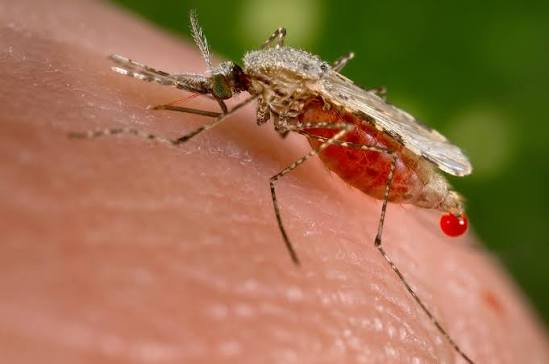
A new genomic study has revealed that the invasive malaria mosquito Anopheles stephensi most likely entered Africa from South Asia through the Port of Djibouti before spreading across East Africa, a finding that researchers say could reshape efforts to combat malaria in rapidly growing urban centres.
This mosquito species was first reported in Africa at the beginning of 2013.
Published in Science, the study analyzed the complete genomes of 645 mosquitoes collected from Africa, the Middle East and South Asia to reconstruct the insect’s invasion history and understand how it developed resistance to insecticides.
The findings suggest that the mosquito, which thrives in artificial water containers commonly found in cities, poses a big threat to millions of urban residents across Africa.
Unlike Africa’s traditional malaria vectors that are largely confined to rural settings, Anopheles stephensi is well adapted to urban environments, increasing concerns that malaria transmission could expand into densely populated cities.
“The invasive urban malaria vector threatens an estimated 126 million people living in African cities,” the researchers wrote, warning that its continued spread could undermine decades of progress in malaria control.
Using whole-genome sequencing, the research team found that African populations of the mosquito are genetically closest to those from Afghanistan and Pakistan, ruling out earlier suggestions that the invasion originated from the Arabian Peninsula. Their analysis also identified Djibouti as the most likely entry point into Africa, with subsequent spread into Ethiopia, Kenya, Sudan and Yemen.
The study found that the mosquito expanded at different rates depending on the landscape. While Sudan’s relatively flat terrain appears to have enabled rapid spread, the Ethiopian Highlands slowed its movement into Ethiopia and Kenya by acting as a natural barrier.
Researchers also discovered that resistance to commonly used insecticides is largely driven by metabolic genes inherited from South Asian populations rather than new mutations that evolved after the mosquito arrived in Africa. This could make conventional malaria control tools, including insecticide-treated bed nets and indoor spraying, less effective.
“A likely maritime origin from South Asia indicates that surveillance at ports should become a priority,” the authors noted, emphasizing the importance of strengthening monitoring at major shipping hubs to prevent further introductions.
The researchers also said that genomic surveillance could help public health officials identify new invasion routes and track insecticide resistance in real time, allowing countries to respond more quickly to emerging threats.
“The invasion of Anopheles stephensi demands immediate, continent-wide coordination. The alternative is potentially calamitous: a new endemic vector that could derail decades of progress in controlling malaria,” the study concluded.
They added that without coordinated regional action, improved surveillance and sustained investment in vector control, Africa risks facing a new era in which malaria becomes an increasingly urban disease.
IMAGE CREDIT