
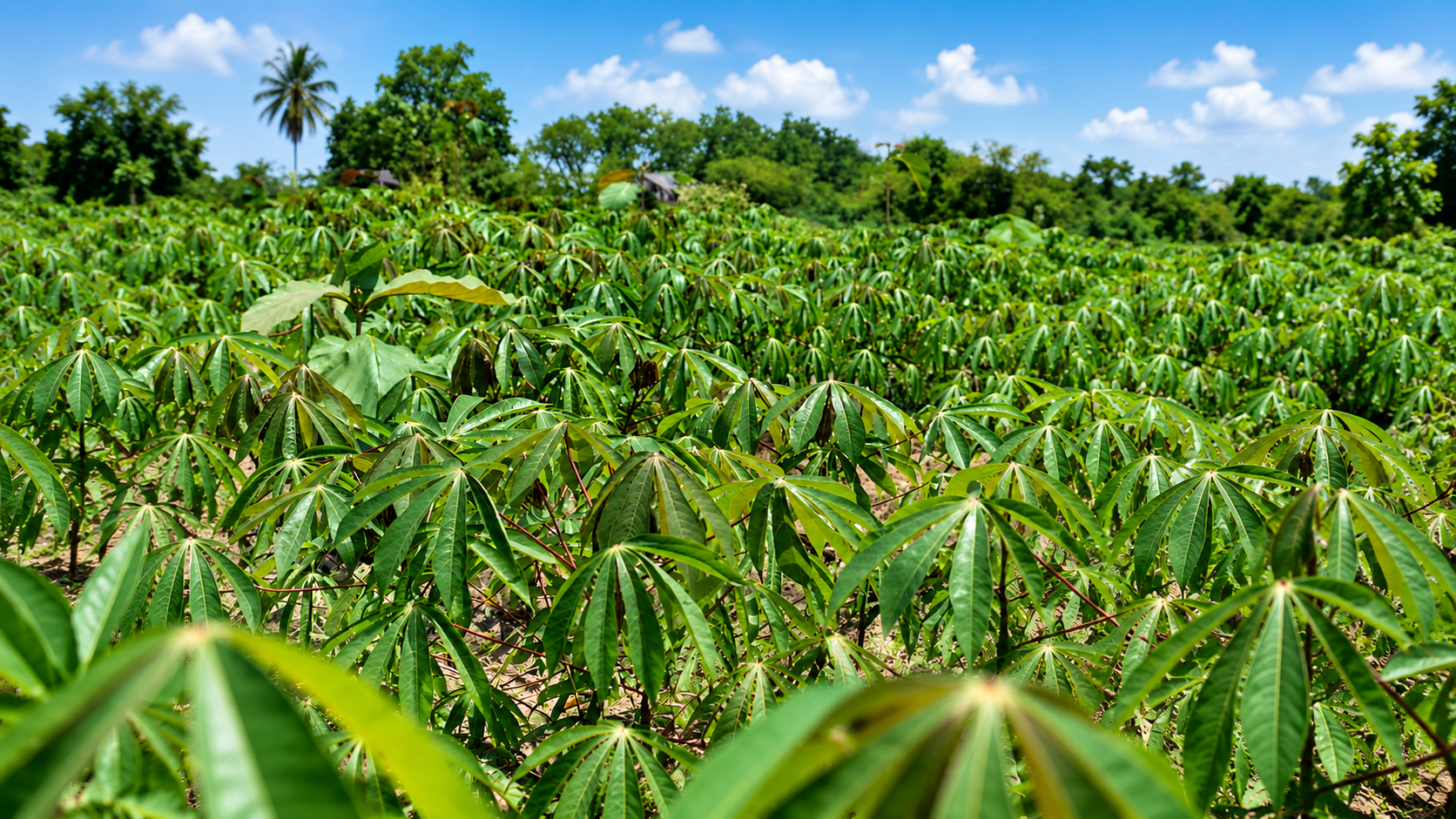
Cassava brown streak disease (CBSD), one of Africa’s most destructive crop diseases, is steadily spreading across sub-Saharan Africa and could reach Nigeria, the world’s largest cassava producer, within the next 25 years if current trends continue, a new study warns.
Researchers, according to a study in Scientific Reports, a Nature Journal, developed a continent-wide computer model to predict how the disease could spread through Africa.
In their findings, researchers found that millions of smallholder farmers who depend on cassava for food and income could face increasing risks unless stronger prevention measures are put in place.
“Nigeria could face cassava brown streak disease within the next 25 years if the epidemic continues its current course across Africa,” the study says.
Cassava is a staple food for hundreds of millions of people across Africa, but the disease attacks the roots of the crop, making them unsuitable for consumption or sale.
Since a major outbreak was detected in Uganda in 2004, the disease has spread into several countries, including Rwanda, Burundi, the Democratic Republic of Congo, Zambia and parts of Kenya.
Furthermore, the researchers found that the disease is likely already more widespread than official reports suggest, particularly in parts of eastern and southern Democratic Republic of Congo and northeastern Angola, where surveillance remains limited.
The study also highlights an even greater danger: the accidental movement of infected cassava planting material through trade or transport.
“If infected cassava planting material is introduced directly into West Africa, the disease could spread across most of the region within a decade,” the study warns.
According to the researchers, Cameroon is likely to become a critical gateway for the disease’s movement into West Africa. Once the virus reaches Nigeria, its extensive cassava production could accelerate its spread across neighboring countries.
Authors argue that preventing the disease from crossing into new regions is far less costly than trying to control it after it becomes established.
“The findings underscore the urgent need for clean seed programmes, stronger quarantine measures, effective surveillance and rapid response to prevent a continent-wide food security threat,” the study says.
However, the researchers say their predictive model offers governments, agricultural agencies, and policymakers an important early warning system, allowing countries to strengthen surveillance, improve border inspections, distribute disease-free planting materials, and prepare rapid response measures before the disease reaches new areas.
The study added that proactive action today could help safeguard Africa’s cassava production, protect rural livelihoods, and strengthen food security for millions of people across the continent.
PHOTO CREDIT