
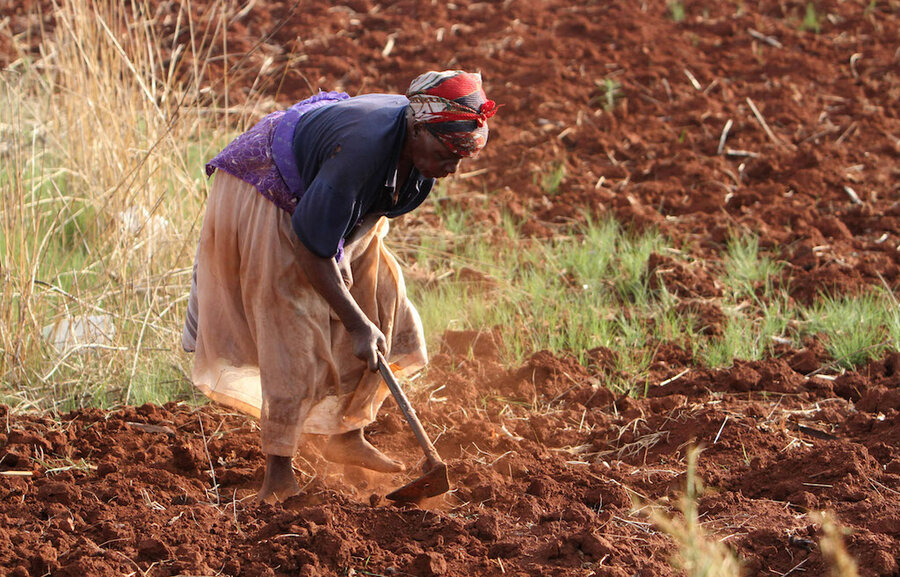
Women smallholder farmers across sub-Saharan Africa are bearing a far greater burden from rising temperatures than their male counterparts, with a new study warning that climate change is widening gender inequalities in agriculture and threatening food security across the continent.
Published in Nature Sustainability, the study analysed 60,558 agricultural plots across seven sub-Saharan African countries and found that female-managed farms experience losses from extreme heat that are two to two-and-a-half times greater than those experienced by male-managed farms.
The researchers found that every additional day of extreme heat causes significantly larger declines in crop yields and farm productivity on female-managed farms, largely because women have less access to resources such as land, agricultural extension services, irrigation, labour and financial support.
“Female smallholders are subject to heat impacts 2–2.5 times those of male smallholders,” the researchers wrote.
The study also found that women often shoulder unpaid household responsibilities, including childcare and collecting water and firewood, limiting the time and resources they can devote to adapting their farms to worsening climate conditions. These structural inequalities leave female farmers less able to cope with heat stress than their male counterparts.
Researchers observed that women with access to agricultural training, advisory services and secure land rights were better able to withstand the effects of extreme heat, suggesting that targeted investments could help narrow the gender gap in agricultural productivity.
“We observe sharper declines in plot yields… on female-controlled plots,” the study noted, adding that women consistently experienced greater agricultural losses than men under the same weather conditions.
Looking ahead, the researchers warn that without targeted adaptation measures, climate change will continue to widen these disparities. Their projections show that by the end of the century, female-managed farms could suffer 7.5% to 19.4% more damage from extreme heat than male-managed farms.
The resulting decline in food production could be severe. According to the study, the additional losses on female-controlled farms alone would amount to 2.3–3.0 billion kilograms of cereal—enough to meet the minimum annual food requirements of 11–15 million people across sub-Saharan Africa.
“These findings unveil structural injustices under negative environmental shocks,” the authors wrote, urging governments and development partners to adopt gender-responsive climate adaptation policies.
The researchers recommend expanding women’s access to agricultural extension services, strengthening land ownership and property rights, improving access to finance and climate-smart farming technologies, and ensuring that climate adaptation programmes specifically address the unique challenges faced by women farmers across Africa.
IMAGE CREDIT