
How did COVID-19 affect health workers in Africa? New evidence from Nigeria suggests that the impact extended far beyond the number of workers formally diagnosed with the disease.
A study of 1,247 frontline healthcare workers in three Nigerian states found that 98.2% had antibodies against SARS-CoV-2, the virus that causes COVID-19, by the end of 2022.
The researchers tested doctors, nurses, laboratory workers and pharmacists at seven healthcare facilities in Oyo, Plateau and Rivers states between August and December 2022, following several waves of the pandemic.
The extraordinarily high antibody prevalence suggests that exposure to the virus among healthcare workers was widespread. Yet only 15% of participants reported having previously been diagnosed with COVID-19, indicating that many infections may have gone undetected.
The study found that 80.6% of the healthcare workers had antibodies against the virus’s nucleocapsid protein, which is generally associated with previous infection.
However, because vaccination can also produce antibodies against other parts of the virus, the researchers could not determine precisely how many participants had been infected versus vaccinated.
The burden was more pronounced among nurses. Researchers found that nurses were three times more likely to be seropositive than laboratory workers, which they suggest could be linked to nurses’ frequent and prolonged contact with patients.
“Frontline healthcare workers remain at increased risk of occupational exposure,” the researchers said in the study. They argue that there is a need to protect workers who are often among the first to encounter patients during outbreaks.
The research also revealed a striking disconnect between knowledge and behaviour.
Although 64.7% of healthcare workers had good knowledge about COVID-19 and 51.3% demonstrated a good attitude towards prevention and control, only 5.3% had good infection-prevention practices.
“Although most healthcare workers demonstrated good knowledge of COVID-19, this did not translate into appropriate IPC (Infection Prevention and Control) practices,” the researchers noted.
Researchers say this gap raises concerns about the ability of health systems to protect workers during future infectious disease outbreaks. Knowing how a virus spreads does not necessarily mean that healthcare workers have the equipment, working conditions or institutional support needed to consistently follow prevention measures.
Vaccination or infection
Researchers say the high antibody levels can partly be explained by the prolonged exposure that healthcare workers experienced as successive variants, including Delta and Omicron, circulated in Nigeria.
They also point to vaccination as another possible contributor. However, vaccination coverage among the workers remained less than optimal, and the study did not have complete information on whether participants were partially or fully vaccinated.
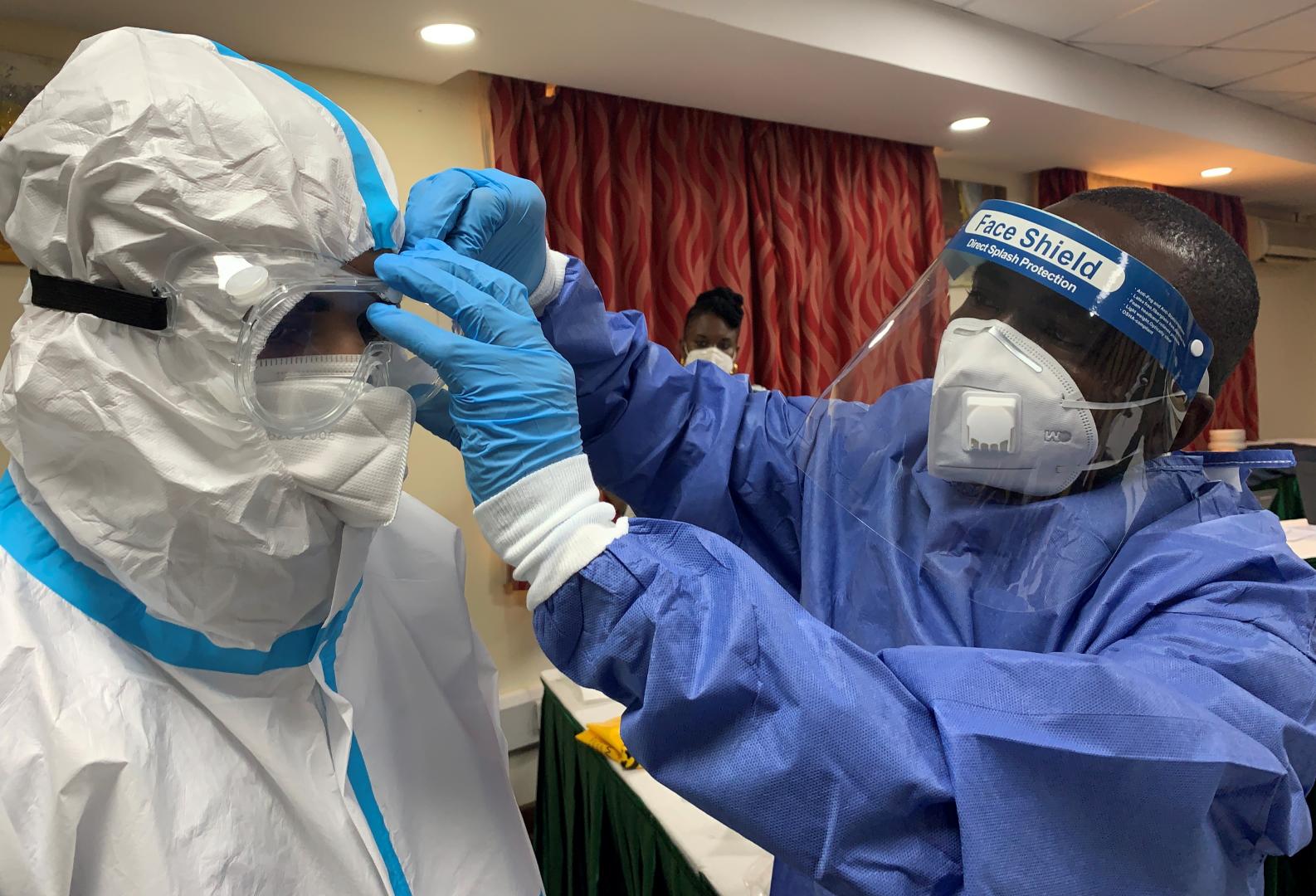
Most importantly, researchers recommend stronger infection-prevention and control programmes in health facilities, better access to personal protective equipment, vaccination and regular surveillance testing.
“Interventions like infection control training, supply of personal protective equipment and surveillance testing are important,” they said, particularly for groups facing higher exposure.
IMAGE CREDIT