
In 1990, health conversations in Africa began with infectious disease. By 2023, a different group of conditions was doing most of the damage: non-communicable diseases, or NCDs, including heart disease, stroke, diabetes, kidney disease, cancer and mental illness.
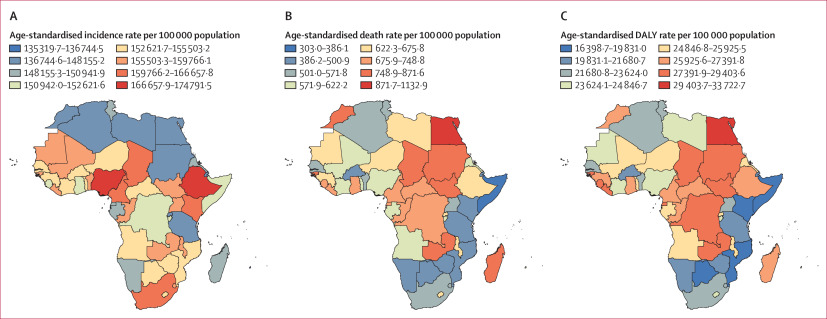
A new study in The Lancet Global Health is the first to assess the NCD burden across all 54 African countries together. Below are snippets of the study.
The share of deaths tells the story. In 1990, NCDs caused about one in four African deaths. By 2023, it was nearly one in two: 4.70 million of 10.48 million. Over the same period, NCD deaths rose 122%, and years of healthy life lost rose 118%.
The top killers have shifted too. In 2023, the leading causes were ischaemic heart disease (801,000 deaths), stroke (700,000), chronic kidney disease (293,000), hypertensive heart disease (246,000) and diabetes (245,000). In 1990 stroke led, and heart disease has since taken first place. Breast cancer deaths rose from about 25,600 to 129,000, and ovarian cancer deaths from about 4,700 to 24,100. Mental disorders are now the biggest cause of years lived with disability, with anxiety and depression contributing most.
Yet there is a twist. Adjusted for age and population size, the NCD death rate fell only 9.0% over three decades, and the rate of healthy years lost fell 6.4%. Globally, NCD death rates dropped 30.9%. The totals are climbing mostly because Africa has more people living longer, while progress per person lags far behind the rest of the world.
Why has this happened? Population growth and ageing come first. More people reach the ages when these diseases appear. The second reason is risk factors. More than half of NCD deaths, 57.4%, were linked to risks that can be changed. High blood pressure was the largest, tied to 26.2% of NCD deaths, followed by poor diet at 14.7% and air pollution at 14.2%.
Diet is changing fast. The authors link deaths from dietary risks, which rose 130% since 1990, to a shift towards more processed food and less access to healthy options. High body weight is the fastest-rising risk, with its disease rate up 58.4%. Air pollution adds to the load. Household smoke is declining, but outdoor pollution is rising with urbanisation and weak enforcement. Africa contributes little to global emissions, yet the authors note it “bears a disproportionate health burden.”
Health systems also catch problems late. Studies cited in the paper show that fewer than half of adults with high blood pressure know they have it, so many people are diagnosed only after a stroke or kidney failure. Funding is part of the problem, since NCDs receive far less money than infectious diseases despite pledges such as the Abuja Declaration.
The authors warn that Africa is not on course to meet the UN target of cutting premature NCD deaths by a third by 2030. The encouraging part is that most of the drivers are preventable: blood pressure checks and treatment, cleaner cooking and transport, healthier food environments, and screening for diabetes and cancer.
There is one caution, however, the above estimates are modelled, not headcounts. Many countries lack complete death registration, and every figure carries a wide uncertainty range.
Read full newsletter