
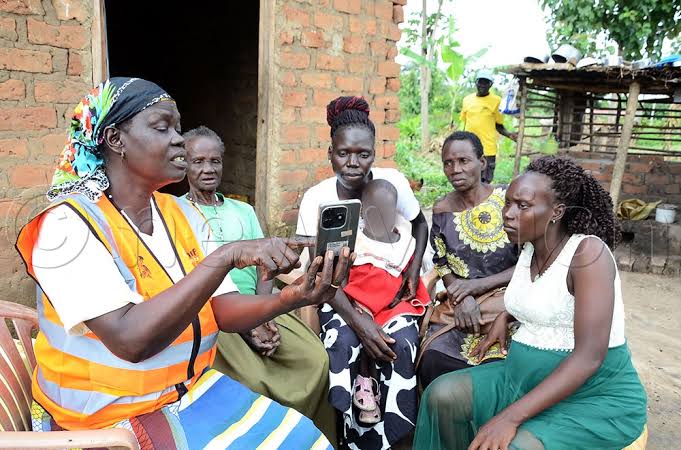
Village health teams in central Uganda have become better equipped, more widely recognised and more trusted by the communities they serve. But a shortage of essential medicines is limiting their ability to treat sick children, according to a new study by Makerere University School of Public Health.
The study found that the proportion of sick children treated by Village Health Teams, or VHTs, fell from 60.5 per cent at the beginning of the project to 22.4 per cent at its conclusion, even as community satisfaction with the workers increased.
The findings, presented on Thursday, October 15, at the Ministry of Health’s 4th Health Promotion and Disease Prevention Conference, illustrate a challenge facing community-based health care: training and equipment can strengthen the reach of frontline workers, but their ability to deliver treatment depends on having the medicines patients need.
The research assessed the Capacity Building for Community Health Workers in the central region between 2021 and 2025.
Better training, more equipment
The project was associated with improvements in several areas of VHT training, including first aid, community mobilisation, household visits and disease prevention.
The proportion of VHTs who had received first-aid training rose from 38.2 per cent at baseline to 72 per cent at the end of the project. Training in community mapping increased from 38.4 per cent to 70.5 per cent, while training in community mobilisation rose from 57.5 per cent to 83.3 per cent.
The changes were accompanied by substantial gains in access to equipment.
Bicycle ownership among VHTs increased from 6.8 per cent to 73.5 per cent. Access to gumboots rose from 40.3 per cent to 89.4 per cent, while the proportion with uniforms increased from 54.4 per cent to 87.9 per cent.
Mobile phone ownership also grew, from 41.3 per cent to 77.3 per cent. The proportion of VHTs with identity cards increased from 3.7 per cent to 47 per cent, while parish coordinators received motorcycles to support their work.
These changes helped address practical obstacles faced by workers who travel between households, identify health problems and connect residents with health facilities.
But the improvements were uneven. Although almost all VHTs had received at least one training module at the start of the project, the proportion increased only slightly, from 98.3 per cent to 98.5 per cent. Access to first-aid supplies rose from 13.8 per cent to 33.3 per cent, while access to medicines used in integrated community case management increased from 35.9 per cent to 65.9 per cent.
The study also recorded a 31.3-percentage-point decline in the proportion of VHTs receiving report books from health centres, alongside reduced provision of storage boxes.
Recognition and trust grow
Financial and non-financial support also improved during the project.
At baseline, 46.1 per cent of VHTs reported receiving at least one form of compensation. By the end of the project, all did.
The proportion receiving financial compensation alone increased from 15.8 per cent to 71.2 per cent, while those receiving both financial and non-financial compensation rose from 19.3 per cent to 28 per cent.
VHTs told researchers that uniforms and identity cards helped them gain recognition in their communities and at health facilities.
“The VHTs loved uniforms and IDs so much because they were more recognizable,” said Prof. Nazarius Mbona Tumwesigye, a monitoring and evaluation expert who presented the findings.
Workers also valued quarterly review meetings, training, community outreach activities and mobile phones that reduced their reliance on paper registers.
Still, some reported sharing weighing scales and blood pressure machines with other workers in their villages. Others complained that some bicycles supplied through the project were of poor quality or arrived broken. Four days of digital-reporting training were also considered insufficient by some participants.
The study found that community confidence in VHTs increased alongside improvements in their working conditions.
Overall satisfaction with VHT services rose from 87 per cent to 93.6 per cent, while trust increased from 84.4 per cent to 91.5 per cent.
The proportion of respondents who knew their household’s VHT increased from 90.7 per cent to 99.3 per cent. Willingness to seek care from a VHT rose from 91.4 per cent to 95 per cent.
Household contact also increased. The proportion of households reporting a VHT visit in the previous three months rose from 70.3 per cent to 82.4 per cent.
The medicine gap
Despite those gains, the study found that VHTs were less likely to treat sick children by the end of the project.
The proportion of sick children treated by VHTs fell by 38.1 percentage points, from 60.5 per cent to 22.4 per cent. Meanwhile, the proportion treated at health facilities rose from 26 per cent to 53.9 per cent.
Researchers also documented a decline in the availability of required medicines among VHTs, from 94.5 per cent at baseline to 67 per cent at endline. Access to oral antibiotics fell more modestly, from 72.4 per cent to 70.6 per cent.
“So most households would find these VHTs without the right medication,” Prof. Tumwesigye said.
A male participant in a focus-group discussion in Masaka District described the consequences for families seeking help close to home.
“They have done a lot to look after our children, but they were lacking some medicine. They don’t have enough medicine,” he said.
The findings suggest that greater community confidence does not necessarily translate into access to treatment when essential supplies are unavailable.
The study also recorded increases in some preventive and child health services. The proportion of respondents reporting child deworming through VHT services rose from 33.7 per cent to 47.1 per cent, while reported child immunisation increased from 34.7 per cent to 52.6 per cent.
The proportion of respondents who said sick children had been assessed by VHTs increased from 43.5 per cent to 52.8 per cent.
According to the presentation, VHTs also helped identify people who might have hypertension or diabetes, trace children who had missed vaccinations and refer patients to health facilities.
However, the assessment relied on comparisons between conditions at the beginning and end of the project. The findings show changes over time but do not, on their own, establish that the project caused every improvement or decline.
Sustaining the gains
Researchers identified several other obstacles to effective community health services, including rushed training, an ageing workforce, delays in replacing VHTs who leave or die, poor-quality equipment and growing workloads.
They recommended increased funding for medicines used in integrated community case management, continued supervision and mentorship, and longer training in digital reporting. They proposed extending digital-reporting training to at least two weeks.
The researchers also called for resources to help supervisors conduct field visits, funding for VHT activities through the Primary Health Care fund and a shift from radio talk shows to community dialogues that could engage residents more directly.
Other recommendations included developing a retirement-age policy for VHTs, speeding up the replacement of departing workers, considering an expansion of services to people older than five years and providing an ambulance to support referrals of pregnant women to health facilities.
IMAGE CREDIT