
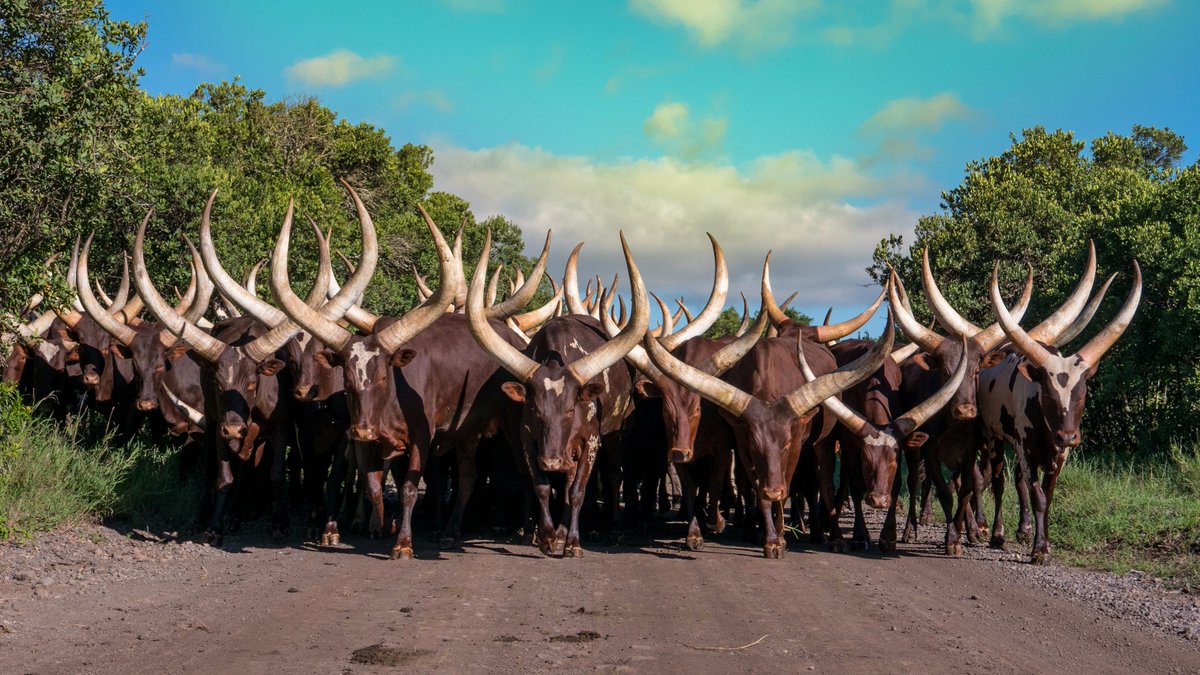
A major international research project has produced one of the largest genomic datasets ever assembled for indigenous African cattle, which reveals genetic diversity that helps local breeds survive harsh climates, disease outbreaks, and poor grazing conditions across the continent.
The study, published in the journal Scientific Data, analyzed the complete genomes of 240 cattle from Egypt, Uganda, and South Africa. Scientists say the findings could play a critical role in protecting Africa’s livestock heritage while helping farmers adapt to climate change and emerging animal diseases.
“Indigenous cattle are central to livestock production in Africa, valued for their adaptability to harsh tropical environments despite lower productivity than commercial breeds,” the researchers wrote.
The team discovered more than 43 million genetic variants in the animals before filtering the data down to about 27 million high-quality variants for detailed analysis. The researchers described the dataset as one of the most comprehensive collections of African cattle genomes ever created.
African cattle have long been known for their ability to survive under conditions that would challenge many imported breeds. Around the continent, local breeds withstand extreme heat, drought, parasites, and devastating livestock diseases while surviving on sparse grazing land.
The study found strong evidence of genetic adaptations behind this resilience.
“African cattle breeds exhibit notable adaptability to tropical diseases, heat stress, and limited forage quality,” the paper noted.
In Uganda, breeds sampled included Ankole, Karamojong, Nganda, Nkedi, and Ntuuku cattle, which are commonly exposed to diseases such as East Coast fever, trypanosomiasis, and helminth infections. In South Africa, breeds such as Nguni, Afrikaner, Bonsmara, and Tuli face tick-borne diseases, anthrax, and foot-and-mouth disease.
Scientists say these local breeds may hold the key to developing future livestock systems capable of surviving rising global temperatures and shifting disease patterns linked to climate change.
The research also traced the complex ancestry of African cattle. Modern indigenous breeds are a mix of ancient cattle lineages from the Middle East, Africa, and South Asia that merged over thousands of years through migration and breeding.
Some breeds, such as Sanga cattle, are ancient hybrids of Bos taurus and Bos indicus cattle, while East African Zenga cattle developed from later crossings between zebu and Sanga populations.
Using advanced genome analysis, the researchers showed clear genetic differences between cattle populations in North, East, and Southern Africa. Egyptian cattle displayed stronger taurine ancestry, while some Ugandan breeds showed greater indicine influence. Southern African Sanga breeds occupied an intermediate position between the two ancestral groups.
Despite their importance, indigenous African cattle are increasingly threatened by crossbreeding with imported commercial animals selected mainly for high milk or meat production.
“The widespread introduction of commercial taurine breeds and their crossbreds has raised concerns about the erosion of indigenous genetic diversity and the loss of locally adapted traits,” the researchers warned.
The study’s authors argue that preserving indigenous cattle is essential not only for Africa, but for global agriculture.
“This comprehensive genomic resource provides a foundation for future studies of genetic diversity, breed identity, population structure, local adaptation, breed-specific traits, or strategies for global cattle conservation,” the authors wrote.
IMAGE CREDIT