
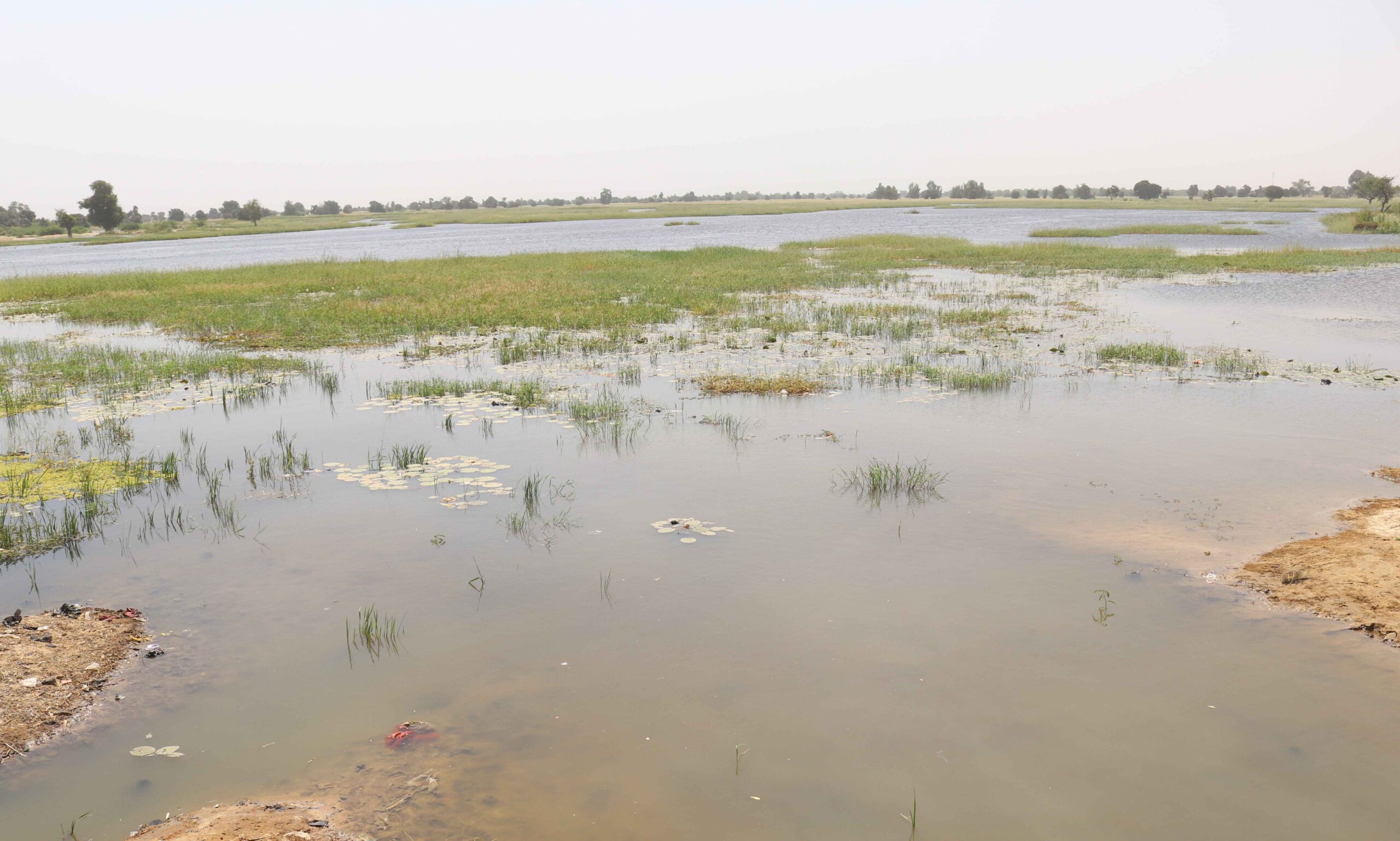
A scientific study has found that a devastating drought that struck the Sahel region of West Africa decades ago may have permanently changed how the land handles rain, making some regions far more vulnerable to flooding today.
The research, published in the journal Nature Communications, examined rainfall, rivers, vegetation and land conditions across West Africa from 1950 to 2015.
Scientists discovered that even after rainfall partly recovered following the severe 1970s–1990s drought, rivers in parts of the Sahel began producing much more runoff and flooding than before.
Normally, less rain means less river flow. But in the Sahel, the opposite happened, a phenomenon scientists call the “Sahelian paradox.”
The researchers say the drought pushed the landscape past a critical tipping point.
Before the drought, vegetation and healthy soils helped absorb rainwater. But years of extreme dryness killed plants, exposed bare soil and triggered erosion. Over time, the land became harder and less able to soak up water.
Instead, rainfall began rushing across the surface into rivers and streams. “The drought and the associated aridity shock caused vegetation to die off,” the study said.
Scientists found that some river basins now produce more runoff from the same amount of rain than they did in the 1950s. “In all of these basins, the post-drought runoff ratio increased two to threefold between 1950 and 2015…” the researchers reported.
The study argues that the region may have shifted into a completely new “hydrological regime” — essentially a new normal in how water moves across the landscape.
“This confirms that a hydrological regime shift towards a higher runoff for a similar annual rainfall has occurred in the Sahelian basins.”
One of the most worrying findings is that the changes may last for decades, even if rainfall improves.
“A shift to the high runoff state implies that the recurrent devastating floods observed since the 2010s could persist regardless of how the rainfall regime evolves,” the paper warned.
The researchers say the damage became self-reinforcing. As vegetation disappeared, more water flowed across the land. That extra runoff then caused even more erosion and prevented plants from growing back.
“Once established, self-sustaining hydrological connectivity and gully networks are unlikely to disappear naturally…” the authors wrote.
PHOTO CREDIT: FAO