
Do Africans care about climate change? It is a question worth asking because climate change isn’t a distant threat to the continent. Also, its effects are now difficult to ignore.
Everywhere in Africa, climate change is showing up in people’s daily lives. That can be through failed harvests, prolonged droughts, destructive floods, rising food prices, disappearing water sources, and frequent severe wildfires, to name a few.
The evidence is mounting. The World Meteorological Organization’s latest State of the Climate in Africa report says the continent is warming faster than the global average, while extreme weather is imposing a growing human and economic toll. Floods have become one of the continent’s most reported climate hazards.
Also, the consequences go far beyond the weather. A recent systematic review of research on African food systems found consistent evidence that climate change is undermining agricultural production and worsening food insecurity. The review found that 76% of the studies examined reported significant declines in staple crop yields linked to droughts, climate variability and extreme weather events.
For a continent where millions of people depend directly on agriculture and natural resources for their livelihoods, this is why climate change should matter to everyone.
But does experiencing a climate disaster actually make people more concerned about climate change? A preprint study published in Nature Communications offers a complicated answer.
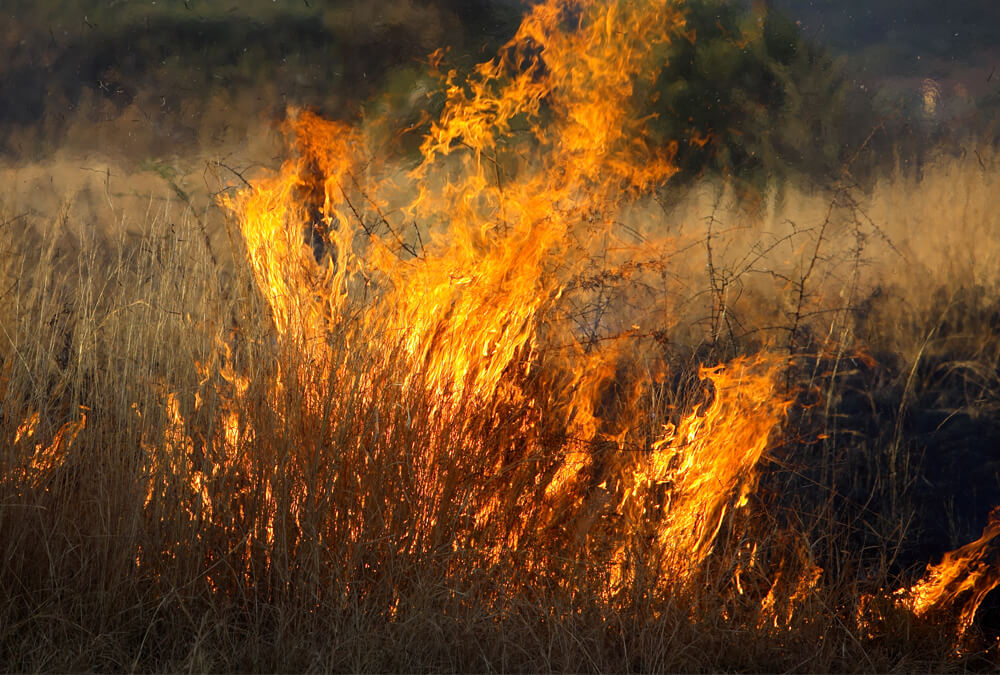
The researchers combined satellite records of large wildfires with Afrobarometer surveys involving more than 100,000 people in 34 African countries. They wanted to understand whether people exposed to wildfires became more politically active.
Their answer was yes. But perhaps not for the reasons many climate campaigners would expect.
The study found that “people living close to wildfires are more likely to vote, contact local councillors, attend community meetings, and raise collective issues.”
People living within five miles of a recent wildfire were, according to the researchers, 7.3 percentage points more likely to vote than those living farther away. Wildfire exposure also increased participation in community meetings and efforts to raise collective problems with authorities.
But here is the most important finding: the fires did not necessarily turn people into climate activists. Instead, “wildfire exposure drives political participation primarily by creating shortages of basic necessities.”
People affected by wildfires were more likely to experience shortages of income and medicine. Faced with these immediate problems, they became more likely to contact leaders and participate in community affairs.
“Climate-related disasters mobilise citizens through immediate economic hardship, needs for public goods, and the disruption of daily life, instead of ideological or environmental awakening,” researchers wrote in the paper.
That finding says something important about how we communicate climate change in Africa.
Perhaps we should stop imagining that everyone needs to care about climate change because they have read an IPCC report or understand the science of greenhouse gases. People may care because the rains have failed, because food has become more expensive, because a flood has destroyed their home, or because a wildfire has disrupted their livelihood.
The Nature Communications study found little evidence that wildfire exposure increased general environmental concern. Instead, people appeared to respond politically because they needed practical solutions.
For me, the key takeaway from the paper is that Africans may not always talk about climate change in the language used at international climate summits. But when a changing climate affects their income, food, health and security, they have every reason to care. That means we have a huge task of localising climate communication.
Read the full newsletter edition.