
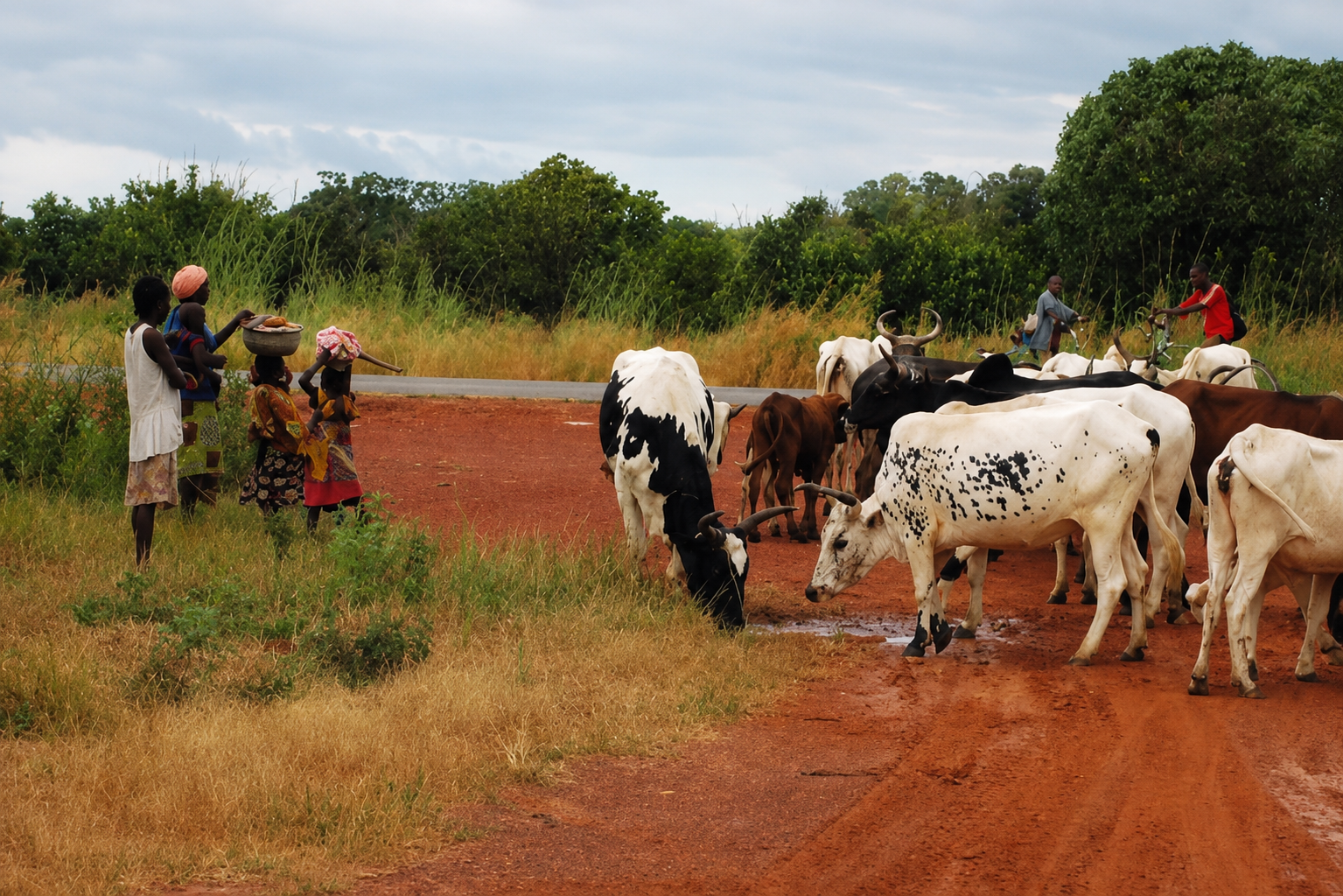
In Coastal Kenya, children living in areas with higher concentrations of cattle around their homes may face a greater risk of malaria infection, according to a new study
The study, published in BMJ Global Health, examined the relationship between cattle and malaria among children aged 5–15 years in Kwale County, Kenya. Researchers used data from the BOHEMIA malaria trial and assessed cattle numbers at different distances around households, ranging from 50 to 600 metres.
The researchers found that higher cattle density within 400, 500 and 600 metres of a household was significantly associated with higher odds of children testing positive for malaria. However, no significant association was found at distances below 400 metres or when cattle were considered simply as a household asset.
“Our hypothesis that cattle presence around the household would be more relevant for malaria prevalence than cattle ownership was confirmed,” the researchers wrote.
The finding challenges the traditional approach of measuring livestock exposure only by asking whether a household owns animals. Researchers argue that cattle belonging to neighbouring households may also influence malaria risk because mosquitoes can move across household boundaries.
The study suggests that cattle could potentially increase mosquito populations in areas where malaria mosquitoes breed, resulting in increased malaria transmission. The researchers explain that “Higher mosquito density might then lead to an increase in malaria transmission (ie, zoopotentiation) limited to the population living in that area, regardless of whether they own the cattle.”
This contrasts with zooprophylaxis, where livestock may protect humans by providing mosquitoes with an alternative source of blood.
The study found that cattle density, rather than simple cattle ownership, was associated with malaria prevalence at the wider 400–600 metre range. At 500 and 600 metres, a higher cattle-to-human ratio was also associated with increased odds of children testing positive for malaria.
The researchers also found that sleeping under a mosquito net was associated with lower odds of malaria infection, while higher rainfall was associated with increased malaria prevalence.
However, the findings do not prove that cattle directly cause malaria. The researchers did not directly measure mosquito populations or malaria transmission, and the study focused on cattle rather than other livestock species. They also noted that the analysis was conducted before the main rainy season, which may limit how widely the findings can be applied.
IMAGE CREDIT