
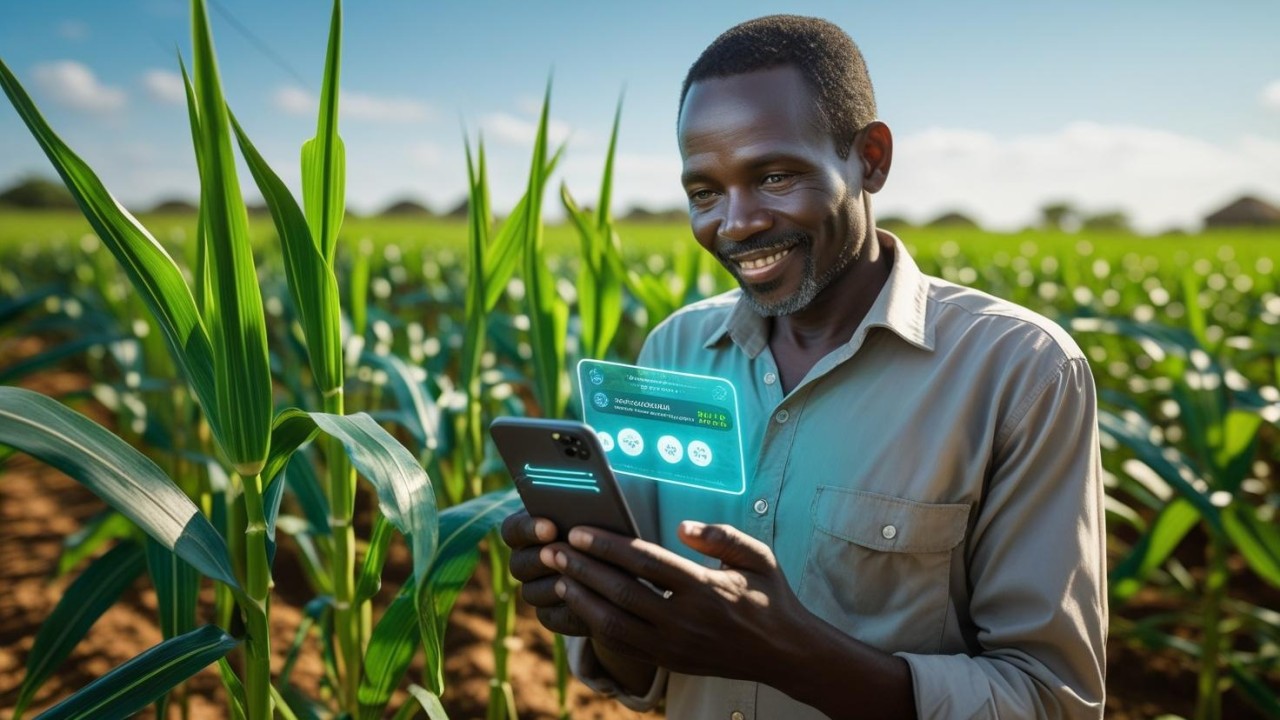
Artificial intelligence (AI) has potential to transform agriculture in East Africa by helping millions of smallholder farmers increase yields, reduce crop losses, and better cope with climate shocks such as droughts and floods, a new study has found.
The study, published in The Scientific World Journal, examined AI use in agriculture across East Africa from 1985 to 2025 and found growing use of digital tools in farming, especially through mobile phones.
Researchers said AI is being used more often to provide farming advice, monitor pests and crop diseases, improve market access, and support climate-smart agriculture.
“Artificial intelligence is emerging as a powerful tool that could transform agriculture in East Africa, helping smallholder farmers boost productivity, improve resilience, and make smarter decisions,” the study said.
Furthermore, researchers found that AI-powered systems can help farmers determine the best time to plant, predict weather changes, detect pests early, and optimize fertilizer and water use.
The study stated that most of these services are delivered through mobile phones via SMS, apps, and chatbots, making them more accessible to rural communities with limited agricultural extension services.
“AI is not replacing farmers’ knowledge; it is strengthening it with timely, data-driven insights,” the study said.
However, despite its promise, adoption remains limited. The study revealed that only a small proportion of East African farmers currently use AI-based services, with uptake concentrated in better-connected countries such as Kenya, which leads the region due to stronger digital infrastructure and widespread mobile money use.
Whereas, other countries, including Ethiopia, Uganda, and Tanzania, are progressing more slowly.
Additionally the researchers identified poor internet connectivity, unreliable electricity, high smartphone and data costs, and low digital literacy as major barriers to wider adoption.
The study also warned that AI could worsen inequality if access remains limited to wealthier or urban farmers. Women and remote rural communities face additional barriers, including lower smartphone ownership and fewer training opportunities.
“There is a real risk that AI could deepen existing inequalities if poorer farmers, women, and remote communities are left behind,” the researchers warned.
The study says that for AI to benefit all farmers, governments and development partners must invest in rural infrastructure, digital training, and affordable technologies tailored to local needs.
IMAGE CREDIT