
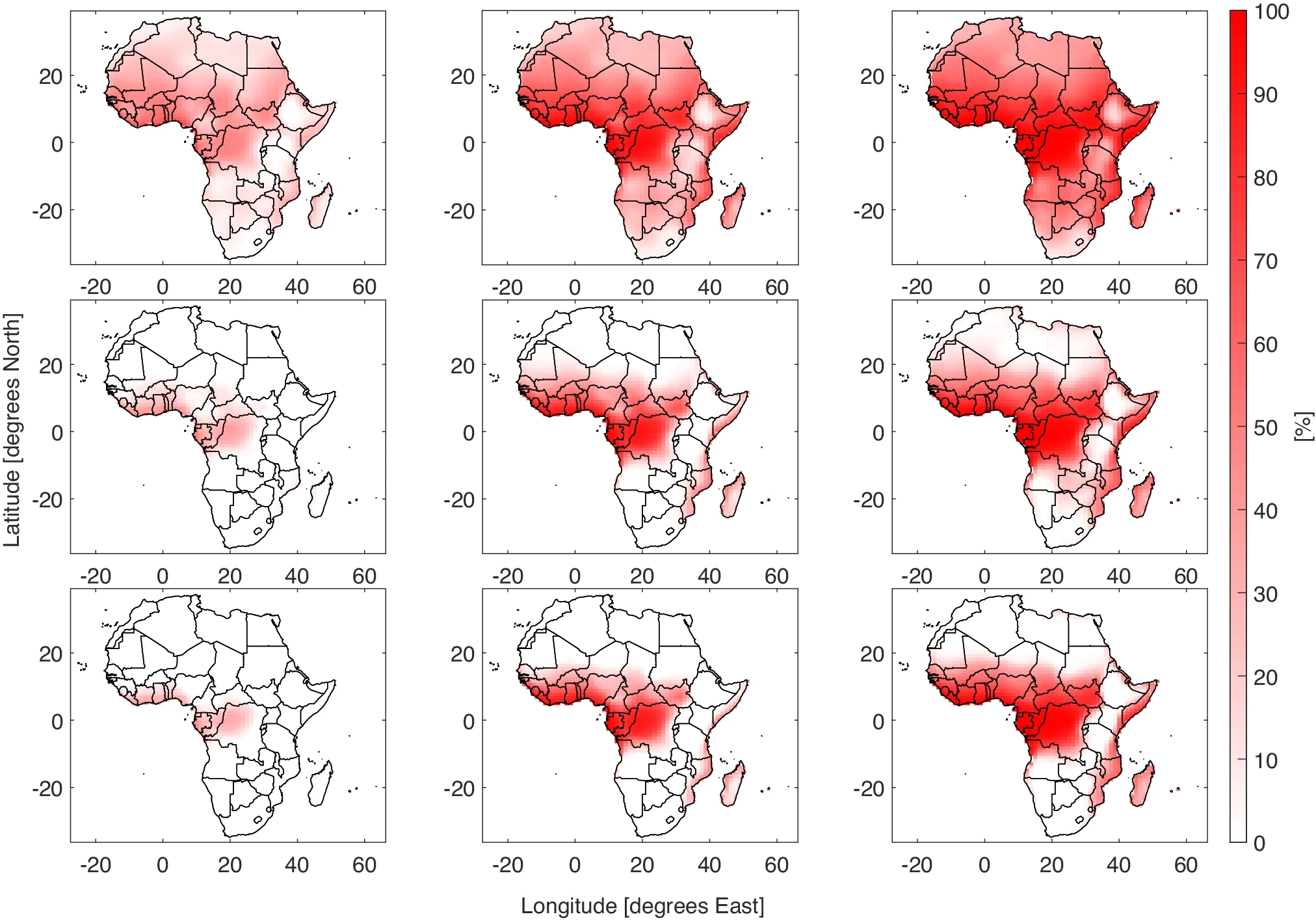
Heat stress across Africa is on the rise, exposing millions of people to increasingly dangerous conditions and posing serious risks to health, livelihoods and urban life, according to a new continent-wide study published in the International Journal of Climatology.
The research, which analysed data from 1974 to 2023, shows that while average temperature increases may appear small, the actual impact on the human body has intensified significantly. Scientists used the Universal Thermal Climate Index (UTCI), a tool that measures how hot it feels by combining temperature, humidity, wind and solar radiation, to better understand real human exposure to heat.
The findings paint a worrying picture. Extreme heat events defined as conditions above 46°C in terms of human thermal stress are becoming more frequent, lasting longer and spreading across wider areas, particularly in northern parts of the continent such as the Sahel. At the same time, less severe heat categories are declining, suggesting a shift toward more dangerous conditions rather than just warmer weather.
“Climate change is a key driver of increasing human heat stress,” the study notes, highlighting the growing influence of global warming on everyday life across Africa.
Urban areas are among the hardest hit. Major cities like Cairo, Lagos and Kano are experiencing longer periods of intense heat, with some locations now recording up to 8–12 hours of strong heat stress in a single day during peak seasons. Rapid urbanisation, combined with limited green spaces and heat-retaining infrastructure, is worsening the situation through what scientists call the urban heat island effect.
The study also found that heat-stressed hours periods when conditions exceed safe thresholds have increased by between 2% and 25% in most African countries. “The frequency, duration and spatial extent of ‘very strong’ and ‘extreme’ heat stress have increased markedly,” the researchers report.
Beyond temperature trends, the human impact is becoming more severe. Between 2000 and 2020 alone, exposure to extreme heat stress rose by 158%, while very strong heat exposure increased by 86%. This means more people are now living and working in conditions that can lead to heat exhaustion, reduced productivity and even death.
Experts warn that vulnerable populations including children, the elderly and those living in informal settlements face the greatest risk. Poor housing, lack of access to cooling systems and limited healthcare services make it harder for many communities to cope with rising temperatures.
“Ongoing warming trends are shifting daily heat stress extremes… exposing more people to higher-severity heat events,” the study explains.
Researchers are calling for urgent action, including early warning systems, better urban planning and policies aimed at reducing heat exposure. Without intervention, the study warns, extreme heat could become the new normal in many parts of Africa, with far-reaching consequences for public health, economic productivity and overall well-being.
IMAGE CREDIT: Springer Nature Paper