
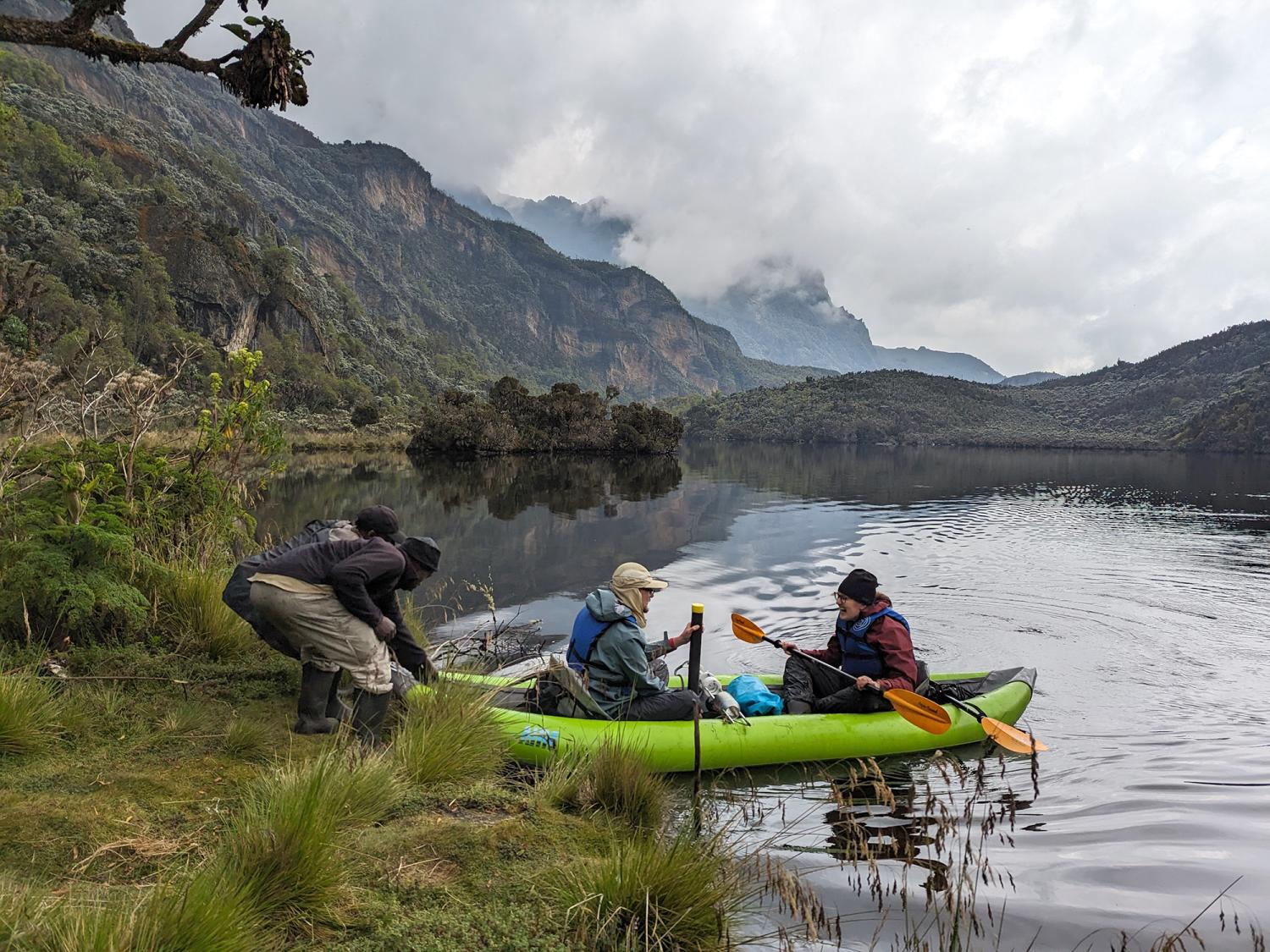
A wildfire that burned parts of the Rwenzori Mountains in western Uganda in 2012 was the first fire to reach the mountain’s highest ecosystems in at least 12,000 years, a new study has revealed.
The study, published in the journal Nature, examined charcoal preserved in lake sediments from the Rwenzori Mountains to reconstruct the region’s fire history.
Researchers found that while fires occurred at lower elevations over thousands of years, there was no evidence of fire in the Afroalpine zone above 3,800 metres until the 2012 wildfire.
“The fact that this one fire in 2012 is the only fire that’s happened on this mountain for the entire existence of the lake is mind-blowing,” Sarah Ivory, a geoscientist at Penn State University and co-author of the study, said
The Rwenzori Mountains, which lie on the Uganda–Democratic Republic of Congo border, are home to unique plants and ecosystems found only on a handful of African mountains.
Scientists said the findings suggest that recent fires are not part of the natural history of the high-altitude landscape.
The study showed that the mountains experienced major climate changes over the past 12,000 years, including periods that were warmer and drier than today. However, those changes did not trigger fires in the Afroalpine zone.
“High-elevation tropical Afroalpine fire is a new twenty-first century disturbance,” the researchers said.
The study also found evidence that fire activity increased at lower elevations about 2,000 years ago. According to the researchers, that increase was likely linked to growing human activity in Central Africa.
“We instead attribute the abrupt increase in fire to an intensification of human activity in Central Africa between 2000 and 3000 years ago,” the study noted.
Scientists said increased fire activity transformed parts of the mountain ecosystem. Areas that were previously dominated by forest vegetation later became bamboo-dominated landscapes.
The researchers say that fire played a key role in driving those ecological changes.
The findings come amid growing concern about the impact of climate change on East Africa’s mountain ecosystems. Researchers warned that rising temperatures, combined with human-caused ignitions, could increase the risk of future fires.
“Our results highlight the role of humans as an important driver of Afromontane fire activity,” the researchers said.
They warned that many plants found in the Afroalpine zone are not adapted to frequent burning and could be vulnerable if fires become more common.
The study also noted that the 2012 fire was followed by flooding and landslides in surrounding areas, highlighting the wider environmental impacts that can result when mountain vegetation is damaged.
PHOTO CREDIT: PENN STATE UNIVERSITY