
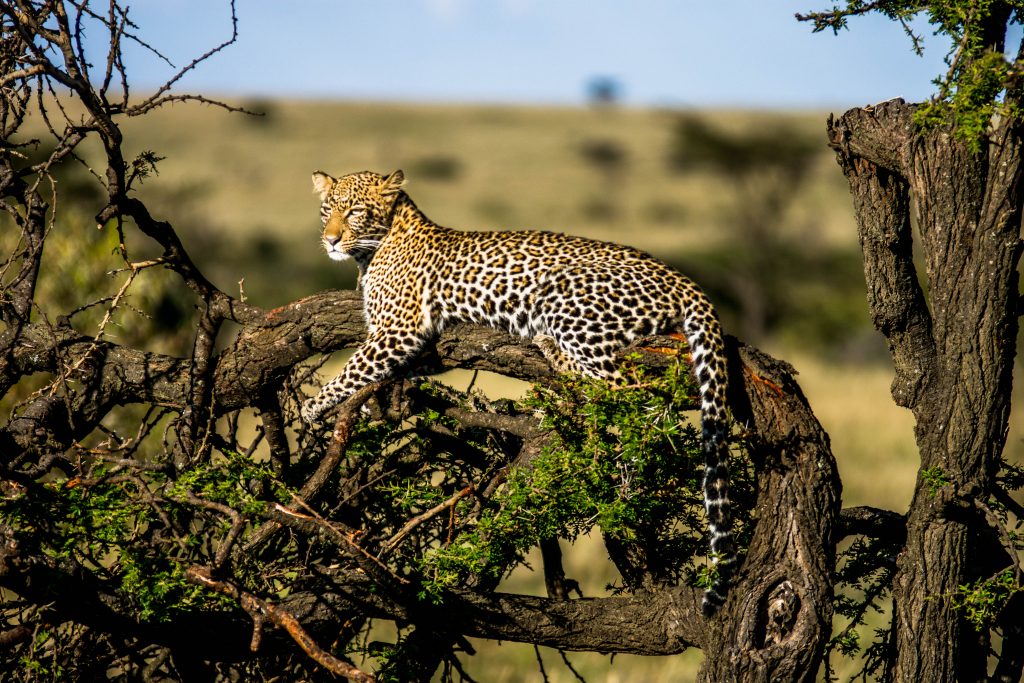
Africa’s leopard population is much smaller than previously believed, with decades-old estimates overstating the number of the continent’s iconic big cats, according to a study, which says urgent conservation action is needed to prevent further declines.
In their key findings, published in the British Ecological Society’s Journal of Applied Ecology, researchers estimated that between 44,800 and 142,600 leopards currently live across sub-Saharan Africa—far below previous estimates of 600,000 to 900,000 animals that have long been used to guide conservation and hunting policies.
The study also found that “Leopards have disappeared from approximately 41% of their historical African range.” The scale of population losses is driven by habitat destruction, expanding agriculture, declining wild prey, poaching and increasing conflict with humans.
Furthermore, using published leopard population surveys combined with habitat suitability models, the researchers developed the most comprehensive continent-wide assessment to date.
Their findings suggest that many remaining leopard populations are concentrated in areas with abundant wild prey and lower levels of human disturbance, while numbers decline sharply where livestock grazing, farming and settlements expand.
“The integrated model predicted a contemporary leopard population of approximately 44,800–142,600 individuals across sub-Saharan Africa, substantially lower than previous estimates,” researchers wrote.
Additionally, the findings also raise concerns over the sustainability of legal trophy hunting in several African countries.
By estimating the number of adult male leopards living outside protected areas, the study found that existing hunting quotas in many countries may be set too high relative to the remaining populations.
“Current CITES leopard hunting quotas exceed the recommended offtake threshold… in more than half of the assessed trophy-hunting countries,” the researchers stated.
They recommend reviewing national hunting quotas to ensure they do not accelerate leopard declines.
However, despite the alarming findings, the study offers hope that leopard populations could recover if governments strengthen habitat protection, restore wild prey populations, reduce human-wildlife conflict and improve conservation efforts across both protected and unprotected landscapes.
PHOTO CREDIT