
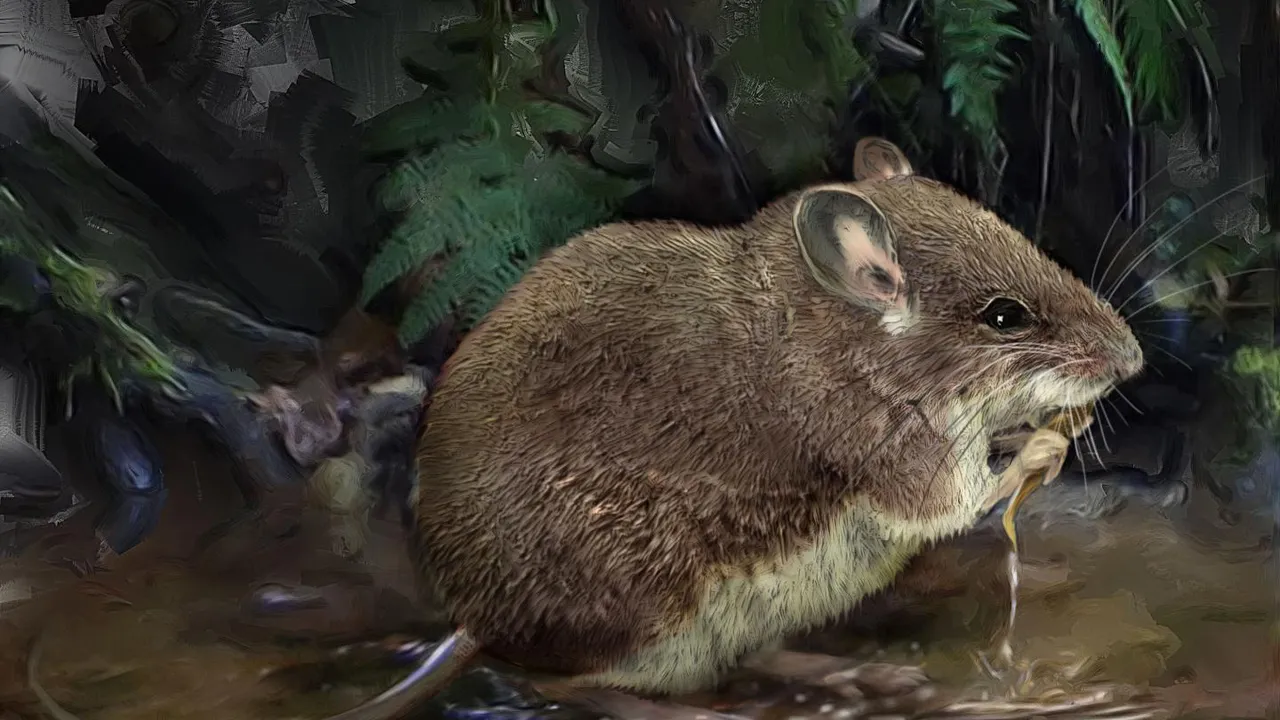
Africa’s house mice have a more complicated genetic history than previously thought, with populations across the continent tracing their origins to different parts of Eurasia.
Their story has been shaped by centuries of human movement, genetic mixing and periods of population isolation, according to a new study.
Published in Molecular Ecology, the study analysed hundreds of whole-genome sequences from house mice collected across Africa, Europe and West Asia to reconstruct how the western house mouse (Mus musculus domesticus) spread across the continent.
The researchers found that house mice did not enter Africa through a single invasion. Instead, different populations appear to have arrived in separate colonisation events, coming from distinct Eurasian sources.
“In Africa, we reveal that the invasion was not a single demographic process, but a mosaic of population-specific histories shaped by multiple independent colonisation events from distinct Eurasian sources, strong population bottlenecks, secondary admixture, and introgression with M. spretus in North African populations,” the researchers said.
The study identified three major European genetic lineages among African house mice. Populations in Morocco, Algeria and Niger showed strong links to Iberian ancestry, while mice from Tunisia were more closely associated with Mediterranean populations.
In contrast, house mice from Senegal, Mali, Gabon and Benin showed stronger genetic connections to northern European populations.
The researchers say human activity likely played an important role in moving the rodents into new parts of Africa.
Recent genetic links between mice in West and Central Africa and European populations are consistent with movement through human transportation and trade networks.
“These results provide new insight into how human-mediated dispersal and secondary contact with native species can shape the genomic legacy of an invasive commensal mammal,” they wrote in the study.
The study also found evidence that invading house mice interbred with the native Algerian mouse, Mus spretus. This mixing was particularly evident in North Africa, where the two species occur together.
The genetic history was not the same everywhere. Some African mouse populations showed signs of population bottlenecks and inbreeding, while others retained relatively high genetic diversity. The researchers suggest that this may reflect the mixing of mice from different ancestral populations and greater movement between populations.
The findings put Africa at the centre of an important question: how do invasive species change as humans move them across continents and bring them into contact with native wildlife?
The researchers stated that the findings make Africa particularly important for understanding how invasive species are shaped by human movement and contact with native wildlife.
“Africa [is] a crucial region for understanding how human-mediated dispersal, admixture, and secondary contact shape the demographic and genomic legacy of commensal mammal invasions,” the researchers said.
IMAGE CREDIT