
More than three decades of research have produced Uganda’s most resilient soybean varieties. With support from the Makerere University Research and Innovations Fund (Mak-RIF), researchers are now taking these improved varieties to farmers across the country while also venturing into value addition through soybean milk and yoghurt production.
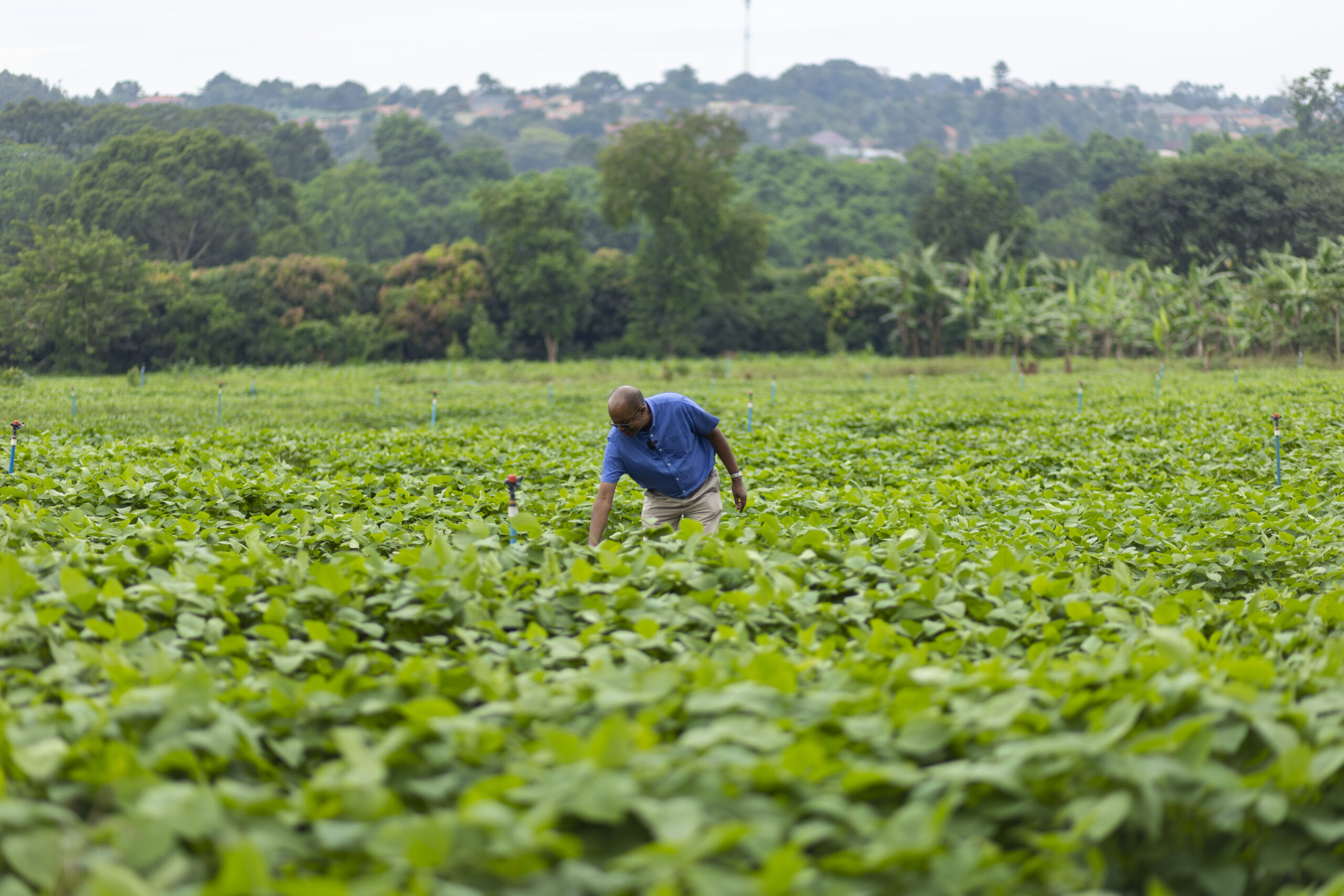
Standing in a field where rows of soybean plants stretch toward the horizon at the Makerere University Agricultural Research Institute, Kabanyolo, Prof. Phinehas Tukamuhabwa sees a product of hard work. He sees over three decades of genetics, thousands of carefully selected crosses, countless failed experiments, and what he believes could become one of the crops that transforms Uganda’s agricultural economy.
Since the early 1990s, Prof. Tukamuhabwa, a plant breeder at Makerere University, has dedicated his career to improving soybean. His interest in the crop began while pursuing his master’s degree in Europe, where he encountered intensive soybean research and became fascinated by its potential for human food, livestock feed, oil production, and soil improvement.
“I saw soybean’s potential as a nutritious food for human beings and for livestock. It can also produce oil and improve the soil. When you put all those things together, you realise soybean is a very special crop,” he says.
It was also during that period that he discovered how strategically important soybean had become to major producers such as the United States.
“The United States realised the value of soybean long ago. It became so important to them that they would not support soybean research elsewhere. To me, that showed just how strategic the crop is and convinced me that Uganda also needed to invest in its own soybean research,” he says.
The United States is the world’s second-largest soybean producer after Brazil, producing about 120 million metric tonnes annually. Its soybean sector, including value addition, is worth an estimated US$124 billion, while Brazil’s soybean exports are valued at more than US$43.5 billion.
After more than three decades of research, now conducted under the Makerere Centre for Soybean Improvement and Development, Prof. Tukamuhabwa’s team recently released what he describes as its highest-yielding soybean variety yet. The new variety, MakSoy 7N, produces more than one-third more grain than existing varieties while resisting one of the crop’s most destructive diseases.
The journey to MakSoy 7N was not quick. Before arriving at the new variety, the team had already developed six others, each contributing to the research that ultimately produced the latest breakthrough.
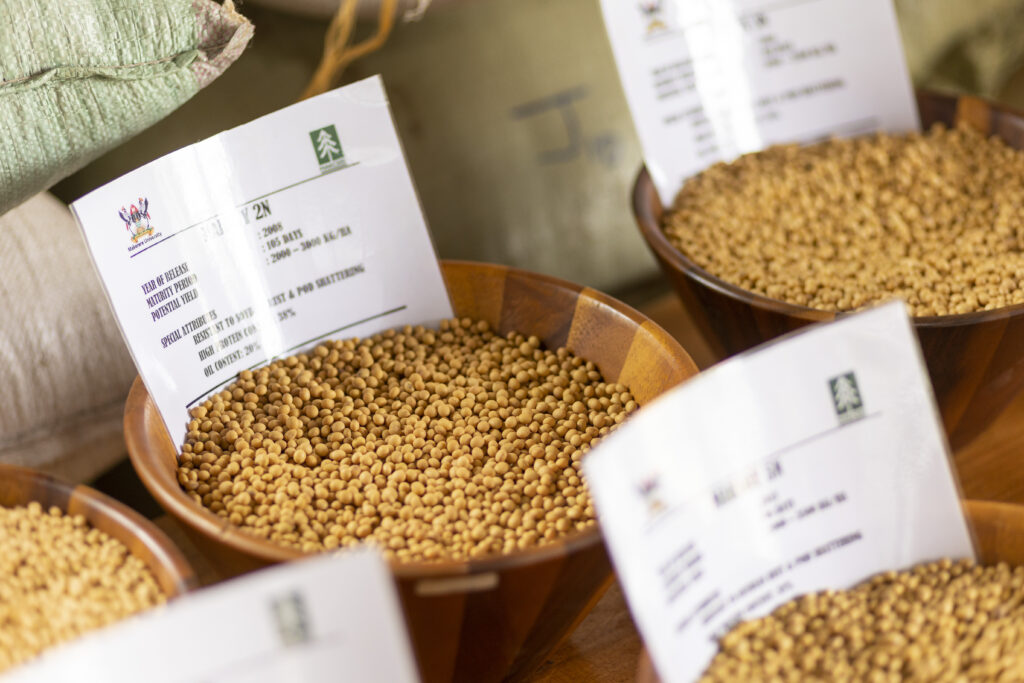
Some of the soyabean varrieties that Tukamuhabwa and his colleagues have developed
According to Tukamuhabwa, MakSoy 7N yields more than 34 percent more grain than current varieties, allowing farmers to harvest more from the same piece of land. Because it is highly resistant to soybean rust disease, farmers can also avoid spending money on fungicides, reducing production costs while limiting the health and environmental risks associated with chemical use.
The Makerere Centre for Soybean Improvement and Development has received funding from Mak-RIF to operationalise its work, including ensuring that these improved soybean varieties reach farmers across Uganda. The fund has also supported the training of farmers on how to adopt the new varieties.
The benefits of improved soybean varieties extend beyond the farm. Prof. Tukamuhabwa says processors have long demanded varieties with lighter-coloured seed coats because darker hulls leave unwanted flakes in flour and other processed foods. MakSoy 7N was deliberately bred to meet those industry needs, creating a crop that benefits both farmers and food manufacturers.
“When the farmer earns more, the processor gets better raw materials, and consumers receive better products; everyone benefits from the technology,” he says.
Soybean is primarily grown in Uganda’s Lango sub-region, where it has already supported the growth of several agro-processing businesses. However, the breeding programme has focused on ensuring that the new varieties perform consistently across Uganda’s diverse climatic conditions.
Researchers deliberately tested the varieties in multiple environments to identify those capable of remaining productive across the country. Tukamuhabwa says the varieties are designed for everyone—from smallholder farmers cultivating a few acres to large-scale commercial producers.
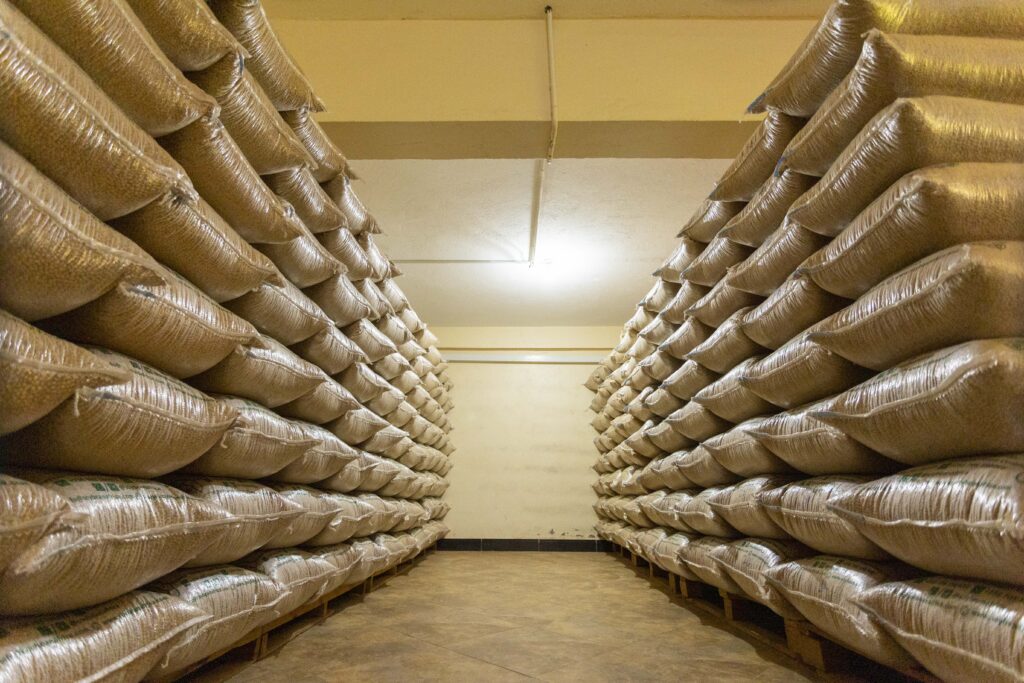
Soyabean in bags ready to be delivered to farmers
Despite decades of scientific progress, he believes Uganda risks missing its biggest economic opportunity if it continues exporting soybeans mainly as raw grain.
“The real challenge is no longer breeding the crop,” he says. “The challenge is what we do with it afterwards.”
The bigger prize, he argues, lies in expanding production while transforming Uganda from an exporter of raw soybeans into a producer of high-value food products.
He points to supermarket shelves stocked with imported soybean milk from Thailand and Kenya. In Kenya’s case, some of those products are made from soybeans originally grown in Uganda.
“Something is wrong with us,” he says. “Kenyans buy raw soybean from Uganda, add value to it, and export it back to us.”
His team has therefore begun taking deliberate steps toward value addition. Prof. Tukamuhabwa says they are currently producing soybean milk and soy yoghurt on a pilot scale, but he believes the next frontier is partnering with the private sector to commercialise these products.
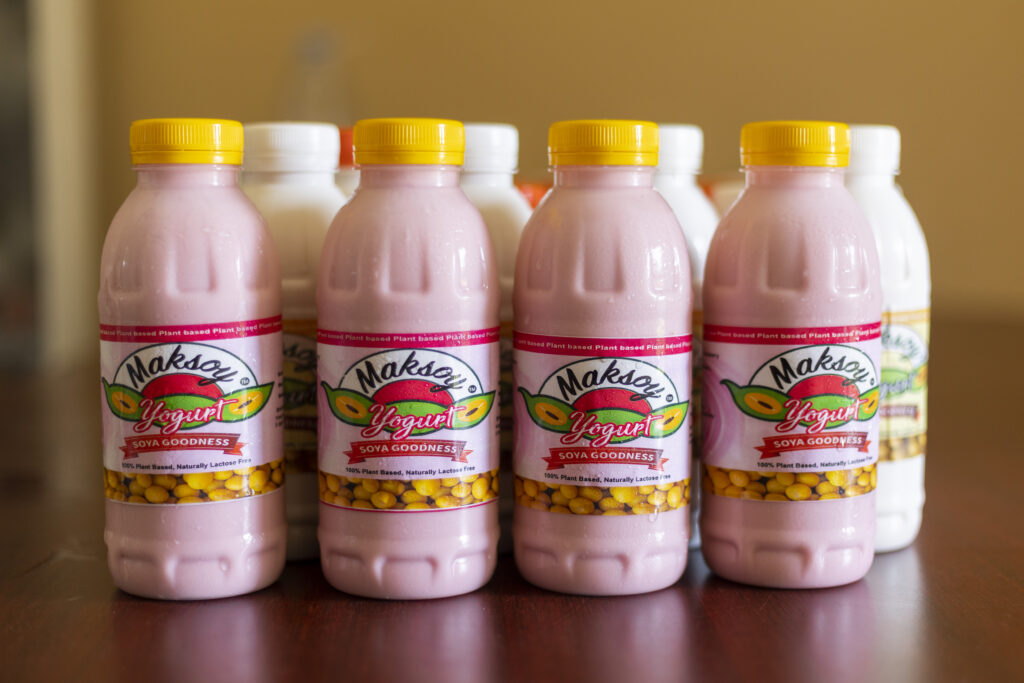
Yoghourt made from soyabean
Agro-processing, he argues, will not only reduce imports but also create industries, jobs, and wealth while giving farmers a larger share of the crop’s economic value.
With Mak-RIF support, the team travelled to Thailand to benchmark that country’s soybean sector. There, the researchers discovered that although Uganda may be ahead in breeding improved soybean varieties, it remains far behind in processing and commercialisation.
The experience reinforced the need for incubation centres, small-scale processing enterprises, and stronger partnerships with industry.
“Mak-RIF acted as a catalyst,” Tukamuhabwa says. “It has opened the way, but we have only just started.”
He gives the example of imported soybean milk, which can cost around UGX 50,000 per litre. For him, value addition is the dividing line between wealthy and poor nations. Countries that process agricultural products create industries, jobs, and wealth, while those that export raw materials allow others to capture those benefits.
“If we continue producing only raw materials,” he warns, “we shall remain poor.”
The soybean milk and yoghurt products developed by his team remain at the pilot stage and are consumed largely within the Makerere University community. However, the long-term goal is commercial production through partnerships with private companies. Such products could reduce dependence on imports while providing nutritious alternatives for people who cannot consume dairy milk.
Getting there, however, requires more than scientific discoveries.
Tukamuhabwa says researchers spend much of their time travelling across Uganda, demonstrating improved varieties, promoting rhizobium biofertiliser, and teaching farmers better agronomic practices. Technology alone, he argues, is not enough if farmers lack the knowledge to use it profitably.
“We go everywhere,” he says. “We don’t remain at the university. Wherever farmers need information, we are there.”
Despite these efforts, he believes government support remains critical.
Uganda, he argues, has already developed the scientific capacity to improve soybean production. What is missing is sustained investment in scaling up technologies, strengthening value chains, and supporting agro-processing industries capable of transforming research into economic growth.
He is particularly keen to see increased local financing rather than continued dependence on donor funding.
“Foreign aid is not sustainable,” he says, adding that while support from the Makerere University Research and Innovations Fund has been vital, increased investment from the private sector would significantly accelerate agro-processing and help turn Uganda’s soybean industry into a major driver of economic growth.
This story was also published by The Observer, a Ugandan newspaper.