Back in 2015, researchers pooled survey data from 16 sub-Saharan African countries. What they found was ugly: about half of everyone living with HIV in the region didn’t know it. That works out to about 11 million people, untreated, unaware, and capable of passing the virus on without knowing.
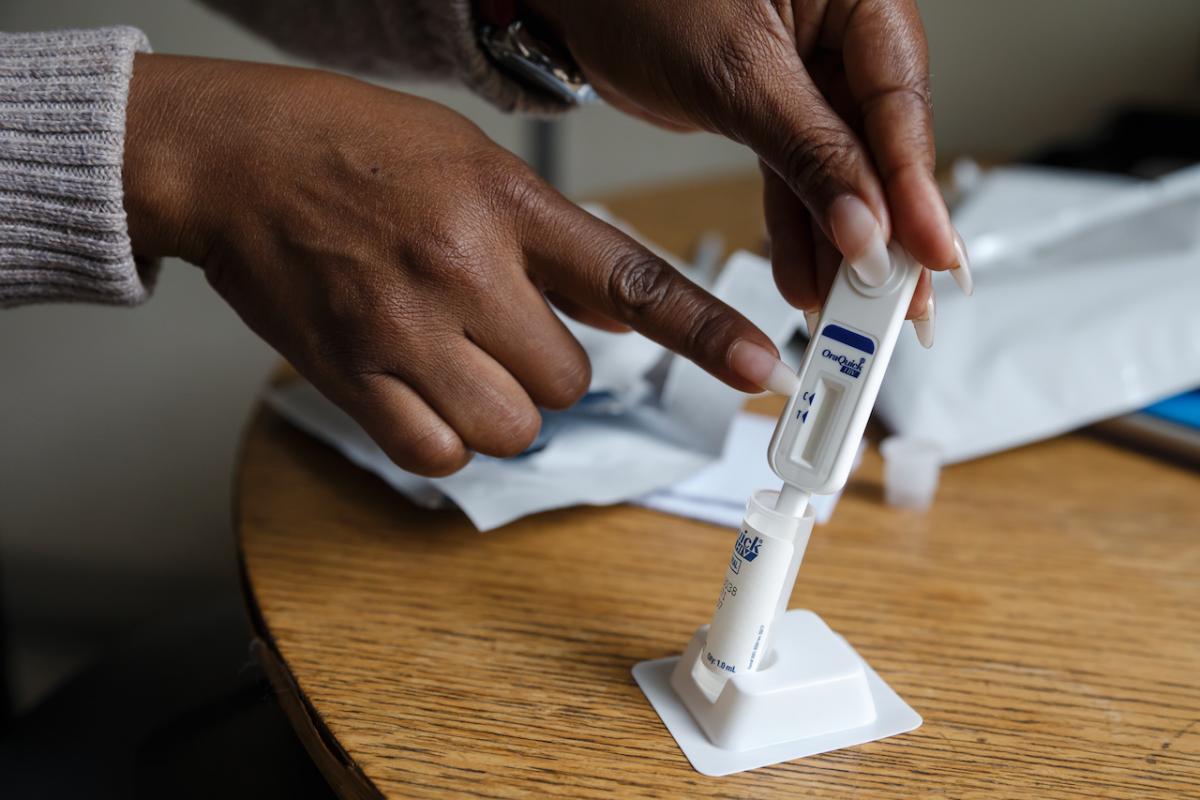
A year later WHO endorsed the obvious fix. HIV self-testing lets someone swab their own mouth or prick their own finger, read the result alone, and skip the clinic altogether—no disclosure, no waiting room, no explaining yourself to a stranger.
It should have changed everything. It mostly didn’t.
Ten years on, in 2025, 2.6 million people in sub-Saharan Africa still didn’t know their status. Worldwide, the figure was 4.9 million. The gap did shrink over that decade but through ordinary clinic testing, the very system self-testing was supposed to work around, not through the private, low-barrier tool everyone had pinned their hopes on.
The procurement numbers tell you why. By 2020, the estimated need across the continent was 177 million kits a year. What actually got bought and confirmed? Around 5.3 million a year, on average, which was 3% of estimated annual need.
A new paper in PLOS Medicine lays out what went wrong, and it wasn’t the science. The test worked fine. What failed was everything built around it.
Start with the pilots. Big demonstration projects across Malawi, Zambia and Zimbabwe generated plenty of papers and proved the concept but nobody ever turned that into a real supply chain. Then there’s what the authors call “the early supervised self-testing paradox”: health workers got pulled back in to supervise a test whose entire point was privacy, quietly rebuilding the clinic bottleneck it was meant to bypass. Add procurement conservatism—PEPFAR, the Global Fund and Unitaid controlled 86% of the market and treated self-testing as a niche extra rather than a frontline tool. And finally, nobody was counting. No public, continent-wide tally of kits actually reaching people ever existed, so for a decade the size of the failure was basically invisible.
One comparison in the paper sticks with me. Pregnancy tests sit on pharmacy shelves everywhere, no supervision required, no “linkage plan” demanded before anyone can buy one—even though a positive result carries plenty of stigma too. HIV self-tests got held to a far higher bar than that, for reasons the evidence never really justified.
There’s a genuine silver lining: kit prices have fallen hard, from roughly $2 in 2020 to under a dollar now. With donor HIV funding down 25% in a single year, that matters. As the paper’s authors put it, closing the remaining gap will take WHO “to set a target,” the big funders “to buy at scale,” and health ministries willing to “let people test without asking permission.”
Read full edition of the newsletter