
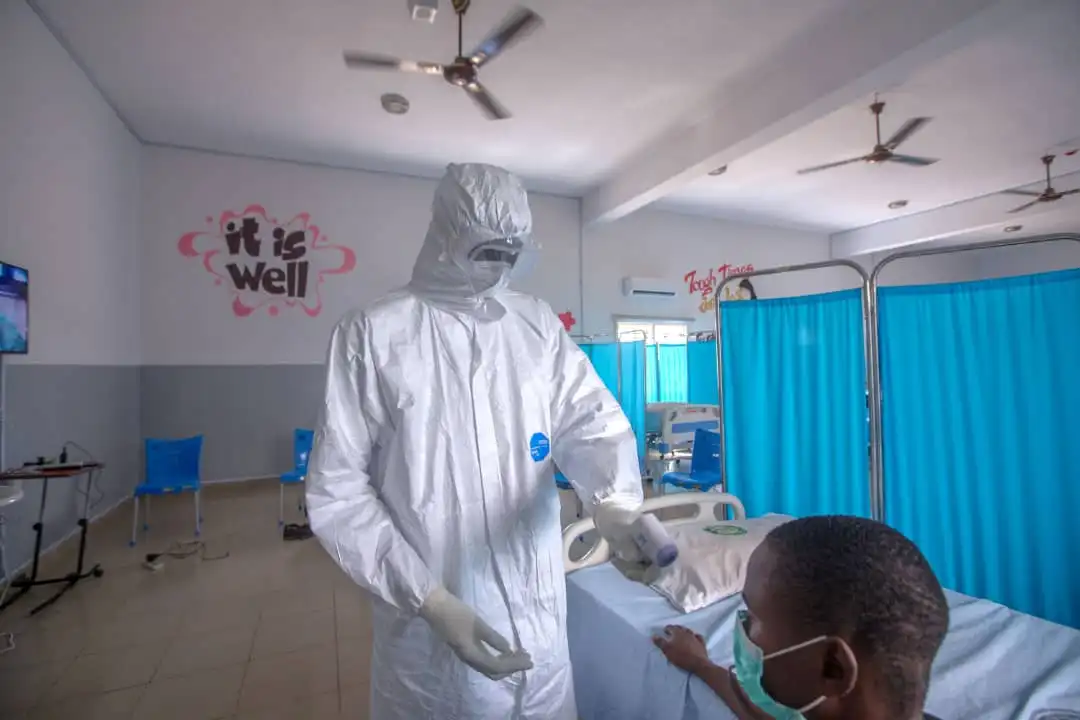
A new study involving more than 20,700 people in Burkina Faso, Ghana and Nigeria has found widespread exposure to COVID-19, adding to earlier scientific evidence that the pandemic affected far more Africans than official infection figures suggested.
Published in Frontiers in Public Health, the study found that between 24.1% and 76.4% of participants had antibodies against SARS-CoV-2, the virus that causes COVID-19. Antibody levels were higher during the period when Omicron was dominant than during the earlier Delta-dominant period.
The research, led by Aniefiok John Udoakang and colleagues, analysed blood samples from 20,748 participants recruited between June 2021 and June 2022. Participants were drawn from selected communities and public spaces, including markets, shopping centres, religious institutions and transport stations.
The researchers found that the high levels of exposure contrasted with relatively low reported clinical illness. They described this as “a marked disconnect between high population exposure and low reported clinical burden”.
The study authors said the findings highlighted the importance of improving disease monitoring, calling for “strengthened community surveillance”.
Vaccination rates among participants were generally low, suggesting that natural infection was the main source of the antibodies detected, especially in Burkina Faso and Ghana.
The findings are consistent with a 2022 systematic review and meta-analysis published in BMJ Global Health, which examined seroprevalence studies across Africa. It estimated that about 65% of the African population had been exposed to SARS-CoV-2 by September 2021, compared with only a small proportion of people whose infections had been officially recorded.
The review estimated that the number of infections was approximately 100 times higher than the number of officially confirmed cases. It put the estimated number of infections at about 827 million by September 2021, against approximately 8.2 million confirmed cases.
Seroprevalence studies measure antibodies in blood, providing evidence of previous exposure to a virus. They can reveal infections missed by routine testing, including cases that were mild, asymptomatic or never diagnosed.
The gap was also evident in estimates of pandemic-related deaths. A 2022 analysis by the COVID-19 Excess Mortality Collaborators, published in The Lancet, estimated that approximately 2.13 million excess deaths occurred in sub-Saharan Africa between January 2020 and December 2021. This was substantially higher than the number of officially reported COVID-19 deaths.
Excess deaths measure the difference between deaths recorded during a crisis and the number expected under normal circumstances. They can include deaths directly caused by COVID-19 as well as those resulting indirectly from disruptions to healthcare and other services. The estimate should therefore not be interpreted as a count of confirmed COVID-19 deaths.
A 2024 review in Population and Development Review, titled The Missing Millions: Uncovering the Burden of Covid-19 Cases and Deaths in the African Region, also found that infections and deaths were substantially underreported across the continent. The authors attributed the gaps partly to limited testing, inadequate healthcare access and weak civil registration and vital statistics systems.
The authors of the West African paper caution that their findings cannot be treated as national infection estimates. Participants were selected through convenience sampling, recruitment sites differed between countries and periods, and different antibody tests were used in Nigeria compared with Ghana and Burkina Faso.
IMAGE CREDIT