
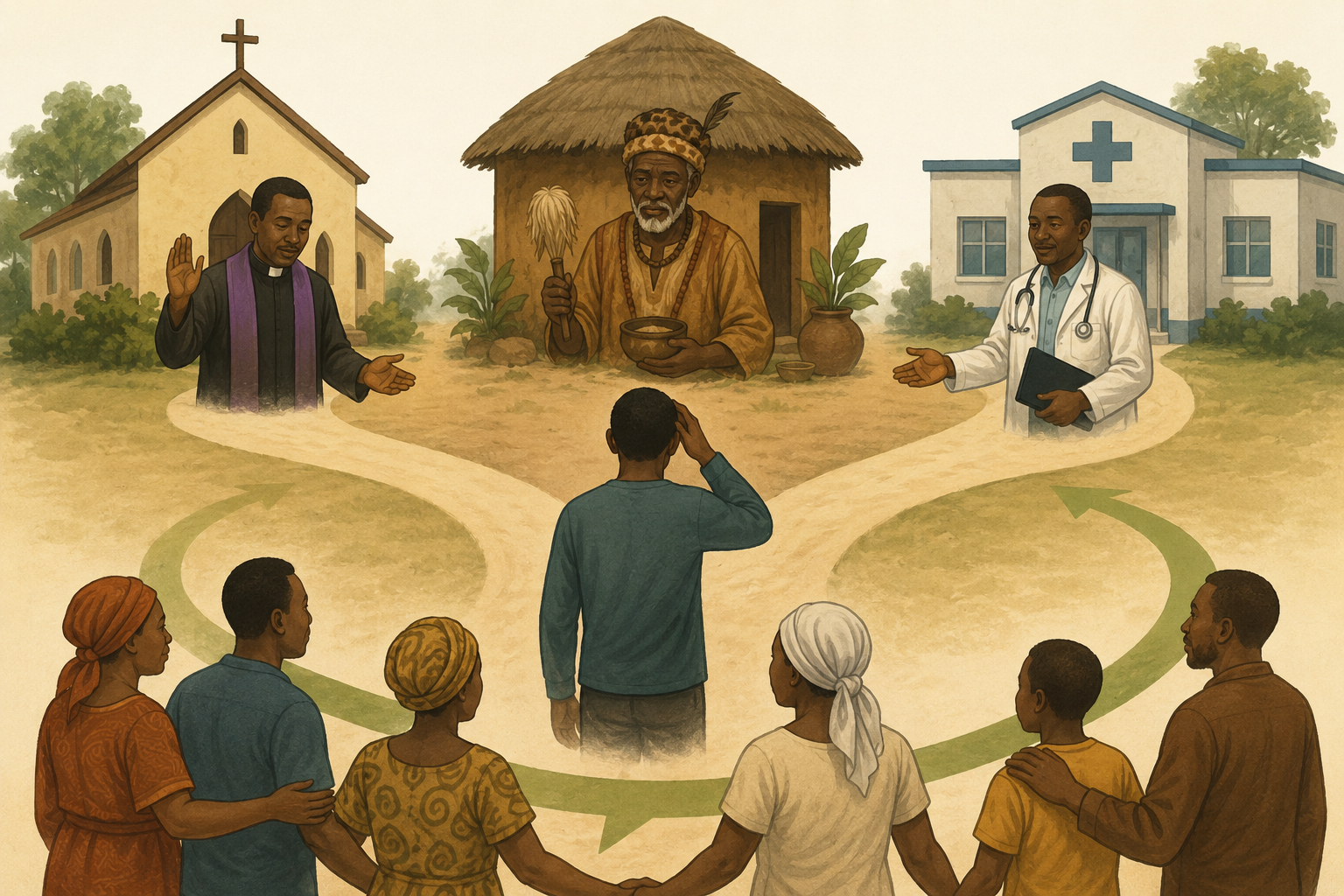
People living with mental health disorders in eastern Democratic Republic of Congo are more likely to seek help from religious leaders or psychiatric hospitals than from primary healthcare facilities, according to a new study that shows the powerful influence of cultural and religious beliefs on treatment decisions.
The study, published in PLOS Global Public Health, surveyed over 400 patients attending nine psychiatric hospitals in the conflict-affected North Kivu region.
Researchers found that almost half of the patients (47.3%) first sought care at a psychiatric hospital, while 89.3% referred themselves rather than being directed through the primary healthcare system. About one in three participants said they first sought help from a religious leader.
The researchers say the findings point to major gaps in the delivery of mental healthcare in a region that has experienced decades of armed conflict.
“Findings reveal the significant underutilization of PHC [primary health care] for mental health needs in conflict zones, individuals instead favoring self-referral to psychiatric hospitals or religious leaders,” the authors wrote.
The survey also found that beliefs about the origins of mental illness remain widespread. Nearly one-third of respondents said mental illness was caused by witchcraft, 30% believed it resulted from supernatural powers, while 12.5% attributed it to divine punishment.
According to the study, these beliefs significantly increase the likelihood that people will bypass primary healthcare facilities in favour of alternative sources of care.
“This behavior is driven by cultural and religious beliefs, specifically attributing mental disorders to witchcraft, divine punishment, and lack of integrated mental health services within the PHC system.”
Rather than dismissing religious beliefs, the researchers argue that faith leaders should become part of the solution. “Religious leaders and traditional healers are of paramount roles in the management of mental health challenges even when psychiatric treatment is used by individuals with mental health challenges in psychiatric hospitals.”
They also recommends building stronger partnerships between religious leaders and healthcare providers, saying such collaboration could encourage earlier diagnosis and treatment while respecting local beliefs.
The researchers also argue that a holistic model of care that considers religious and cultural determinants of health, combining spiritual, traditional, and biomedical treatment approaches, is necessary to improve the management of mental illness in conflict-affected communities.
The author says improving mental healthcare in eastern DR Congo will require strengthening primary healthcare services, improving referral systems and providing culturally sensitive mental health education.
IMAGE IS AI GENERATED