
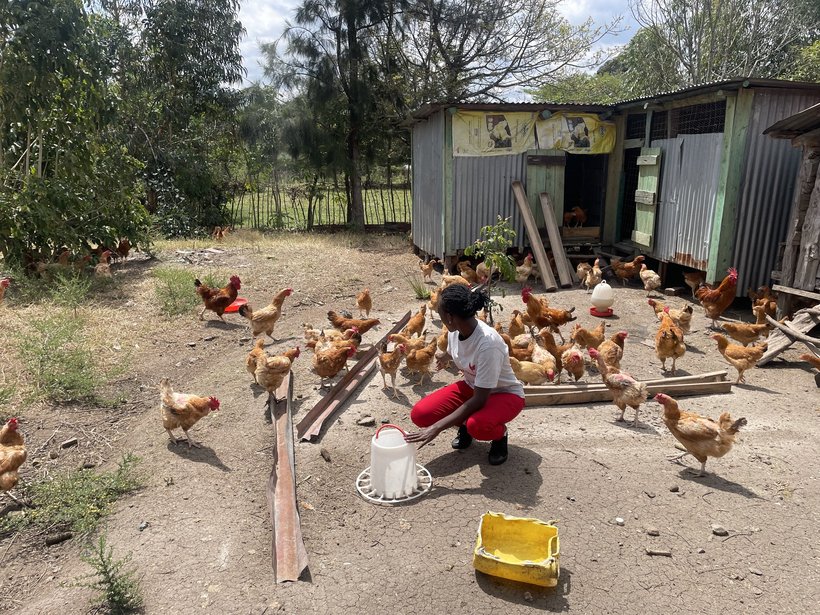
Keeping chickens close to homes may be associated with a higher risk of malaria infection, according to a study involving more than 11,000 people in rural southern Tanzania.
The study, published in Frontiers in Veterinary Science, examined data from 11,406 people living in Kibiti, Rufiji and Kilwa districts. Researchers wanted to find out whether keeping domestic animals, including chickens, cattle, goats, sheep and pets, was linked to malaria infection.
About 56% of the people surveyed lived in households that kept animals, while roughly 27% tested positive for malaria.
The clearest link emerged among households that kept poultry. Researchers found that people living in homes where chickens were kept had a higher risk of malaria, even after taking other factors that could affect transmission into account.
“Poultry-keeping was consistently associated with increased malaria risk across all analyses,” the researchers reported.
The association was seen whether chickens were kept indoors or outside. The researchers also found that the number of birds appeared to matter. Each additional chicken kept indoors was associated with an estimated 1.8% increase in malaria risk, while each additional bird kept outdoors was linked to a 1.4% increase.
The findings, however, do not mean that chickens cause malaria.
Instead, the researchers suggest that keeping poultry around homes could change the environment in ways that influence mosquitoes that transmit the disease. Chickens may release odours and other chemical signals that attract mosquitoes, while poultry shelters, droppings and poor sanitation could provide conditions that keep mosquitoes close to households.
The researchers did not find the same consistent pattern among households keeping cattle, goats, sheep or pets. In one analysis, having an additional ruminant outdoors was actually associated with a small reduction in malaria risk.
The findings could have implications for malaria-control efforts in rural areas, where keeping animals close to the home is common.
The researchers say household animal-management practices may need to be considered alongside established malaria-control measures such as insecticide-treated mosquito nets and other mosquito-control interventions.
With limited literature on the subject, the researchers argued that more research is needed to understand how malaria-carrying mosquitoes interact with different domestic animals.
More importantly, the study highlights the links between human health, animals and the environment, supporting a broader “One Health” approach to malaria prevention.
IMAGE CREDIT