
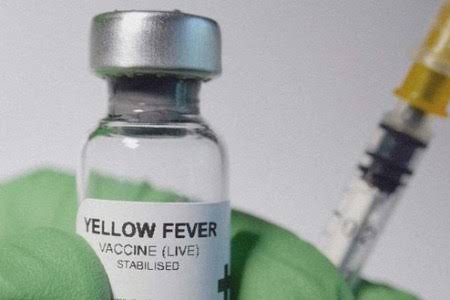
A clinical trial in Uganda has found that giving children smaller doses of the yellow fever vaccine can trigger an immune response comparable to that produced by the standard dose in the weeks following vaccination.
The findings offer a possible way to stretch limited vaccine supplies during outbreaks. The study, published in The Lancet, tested whether one-half and one-fifth of the standard 17DD yellow fever vaccine dose could produce adequate immunity among children aged nine to 23 months.
Researchers enrolled 1,784 children, who were randomly assigned to receive either the standard 0.5 mL dose, a half dose, or a one-fifth dose.
The research comes against the background of yellow fever vaccine shortages during outbreaks. Such shortages have previously forced health authorities to consider fractional dosing, in which a smaller amount of vaccine is given to each person so that available supplies can cover more people.
The World Health Organization has previously recommended fractional dosing when vaccine supplies are critically limited. However, children younger than two years had been excluded from that recommendation because there was limited evidence on how well fractional doses work in this age group.
The Ugandan trial found that four weeks after vaccination, all three groups had very high rates of seroconversion, meaning their bodies had developed an immune response to the vaccine.
Seroconversion was 100% among children who received the one-fifth dose, 99.8% among those who received the half dose, and 100% among those who received the full dose.
The researchers said the two fractional doses therefore performed sufficiently similarly to the full dose to meet the study’s predefined non-inferiority margin.
“The results show that fractional doses met the non-inferiority margin of 5 percentage points for seroconversion at approximately 4 weeks post-vaccination.”
However, the study also found that the strength and persistence of the antibody response became less similar between the groups over time.
At about one year after vaccination, 86.1% of children in the one-fifth-dose group remained antibody-positive, compared with 88.4% among those who received a half dose and 93% among children who received the full dose.
Neither fractional dose met the study’s strict non-inferiority requirement at the one-year point.
The researchers said the half dose appeared to provide a stronger and more sustained immune response than the one-fifth dose, particularly among younger children.
“Our findings provide additional evidence to support the use of fractional doses of yellow fever vaccine in children aged 9–23 months during an outbreak and suggest that a one-half dose might be more appropriate for younger age groups to elicit a higher antibody titre and more sustained immunological response than the one-fifth dose.”
The findings could be important for countries such as Uganda, where health authorities may need to rapidly vaccinate large populations during yellow fever outbreaks while dealing with limited vaccine supplies.
Rather than completely replacing the standard vaccination schedule, however, the researchers caution that fractional dosing should mainly be considered an emergency measure when vaccine supplies are insufficient during outbreaks.
They argue that using different fractional doses according to age could help health authorities make better use of available vaccines while maintaining an adequate immune response.
“An age-tailored fractional dosing strategy could help optimise vaccine supply and immunogenicity during outbreaks.”
IMAGE CREDIT